The Freight Forwarding Software to Run Your Entire Operation
One system for operations, accounting, CRM, quoting, and customer engagement. Shipthis gives freight forwarders full operational control - from the first quote to the final invoice - without stitching together five different tools.
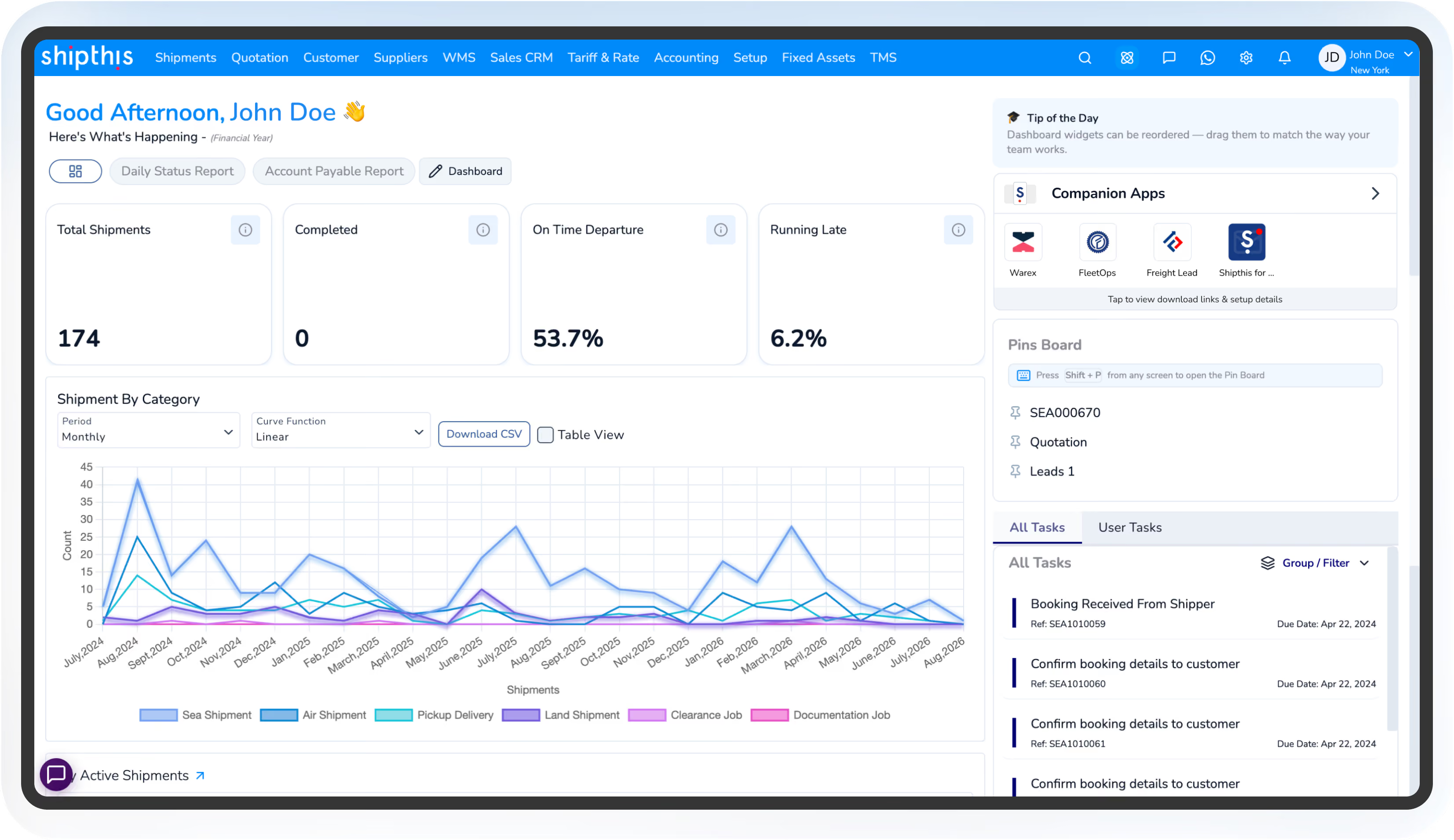
Freight Forwarders in 35+ Countries Run Their Operations on Shipthis
From regional operators managing hundreds of shipments to multi-branch forwarders across the Americas, Europe, Middle East, South Asia, and Oceania have replaced legacy freight systems with Shipthis as their operational backbone.








AI That Actually Does
The Work In Freight Operations
- Most freight teams spend more time managing data than managing freight.
- Documents re-keyed by hand. Rates parsed from emails.
- Vendor invoices matched line by line. Exceptions chased across inboxes.
- None of it moves the cargo. All of it slows the operation.
Magic Drop - Document Intelligence
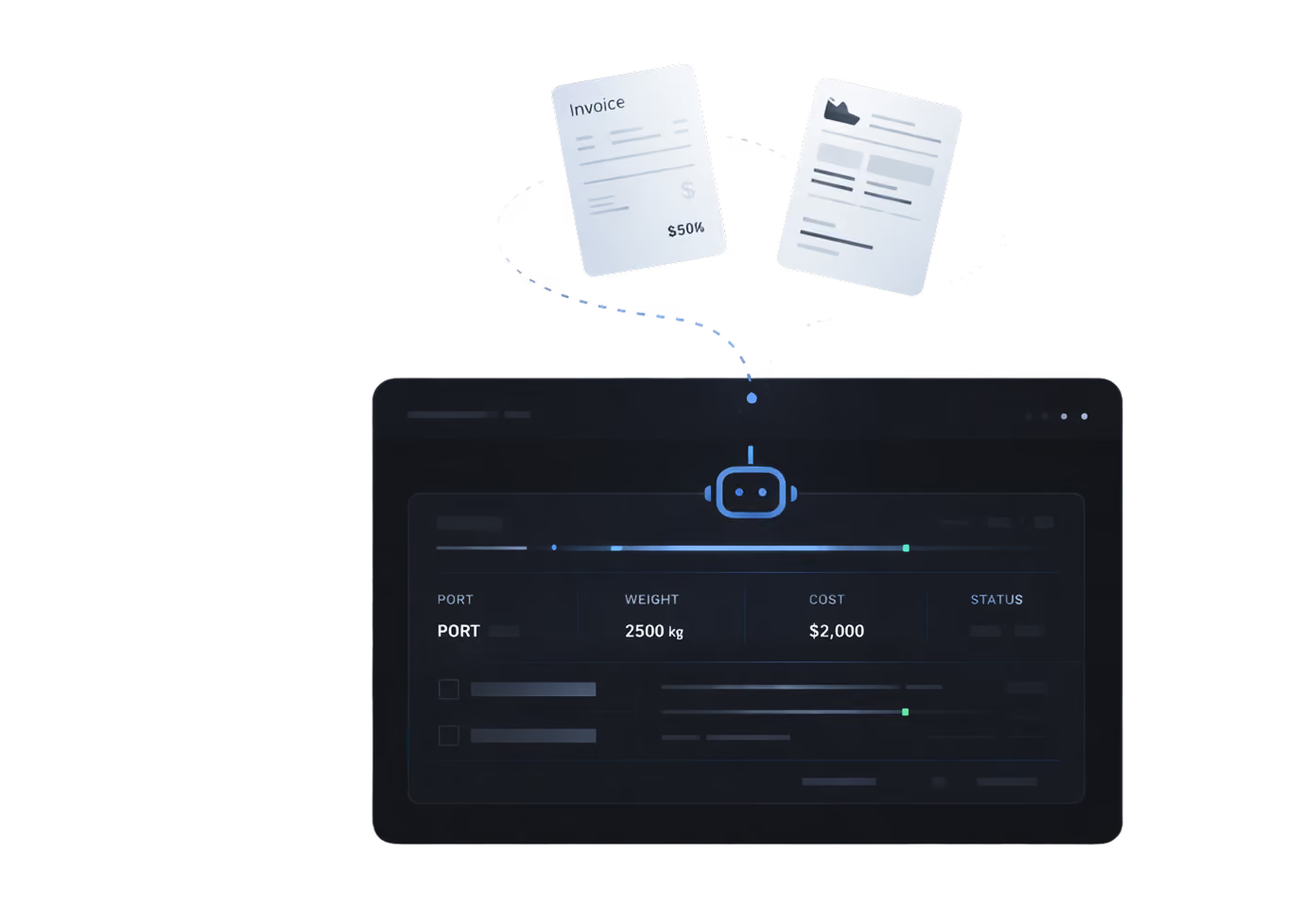
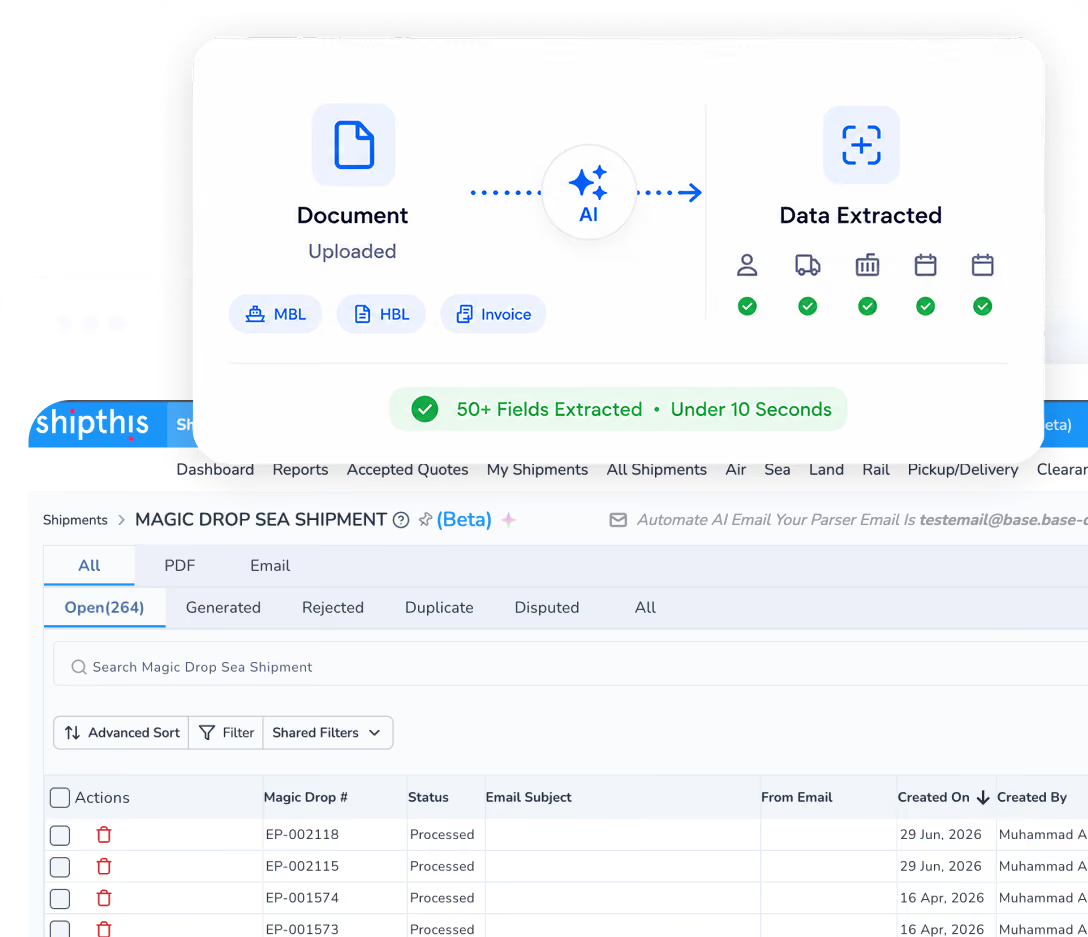
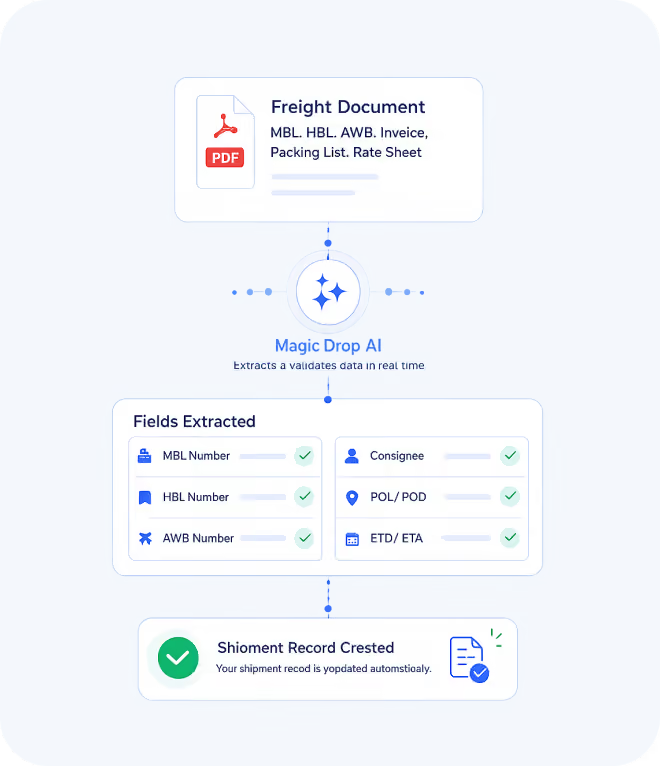
Magic Drop reads freight documents the moment they arrive: MBLs, HBLs, AWBs, commercial invoices, packing lists, and rate sheets. It extracts every critical field, validates the data against the shipment record, and populates your system automatically.
 50+ fields extracted per document.
- Under 10 seconds
- Zero re-keying.
AI Pricing & Rate Intelligence
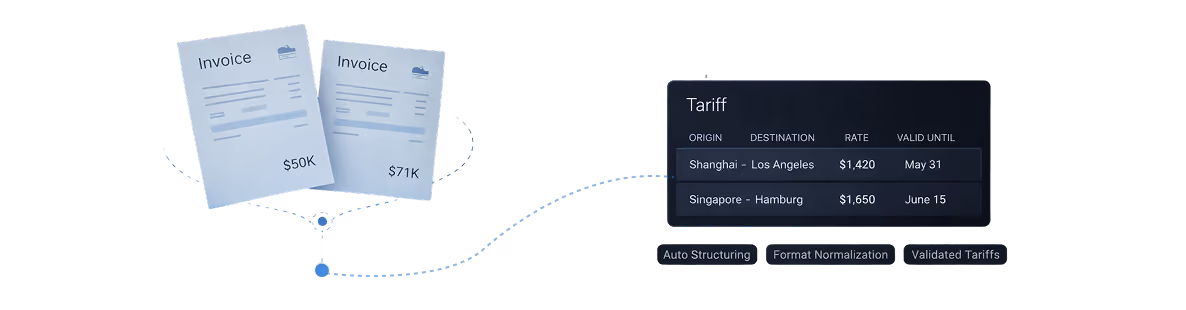
Shipthis AI analyses your historical quotations, customer behaviour, trade lanes, and margins to predict win probability and expected profitability before you send a price. It also normalises incoming rate sheets from carriers and agents — across PDFs, Excel files, emails, and screenshots — into a single searchable rate library.
- Price with precision.
- Know your margin before you quote.
Smart Book - Financial Automation
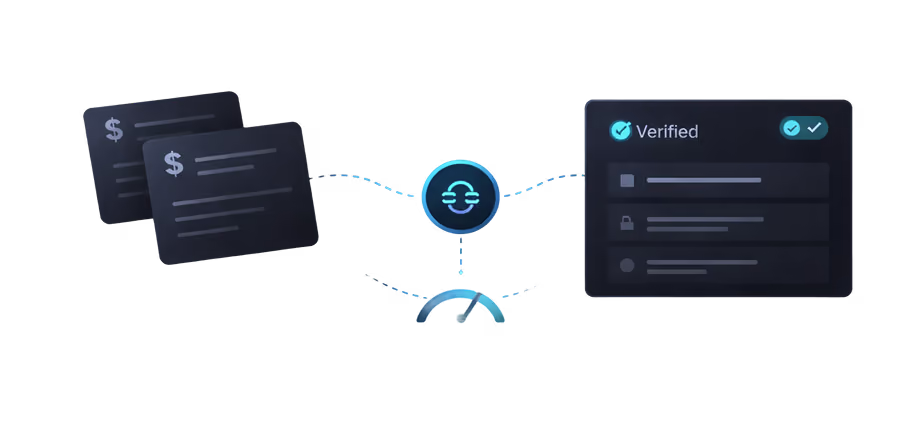
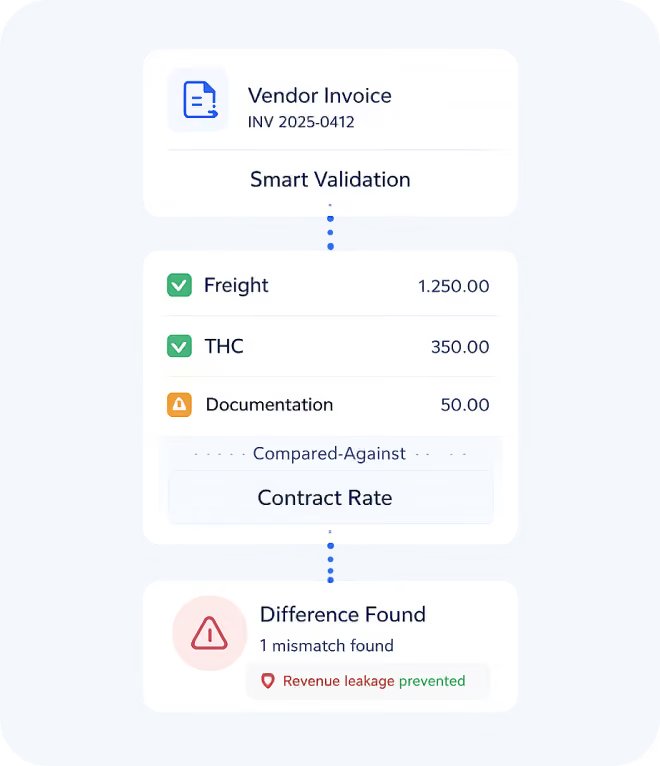
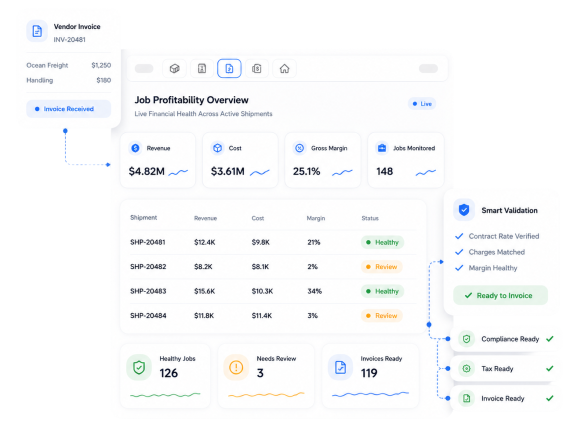
Smart Book reads vendor invoices, matches charges to the correct job, validates rates against your contracted tariffs, and flags discrepancies before the job closes. Every cost is accounted for in real time.
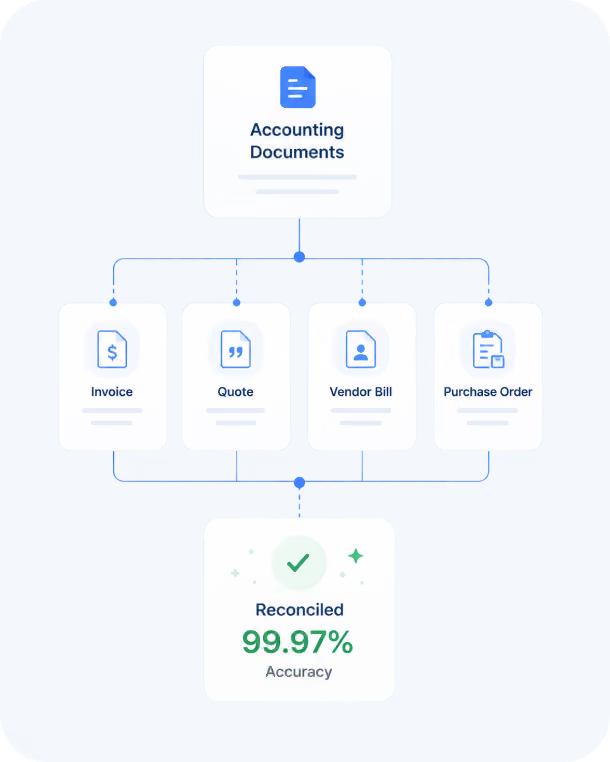
- 99.97% reconciliation accuracy
- Revenue leakage caught before it happens.
Email Bridge - Automated Email Parsing
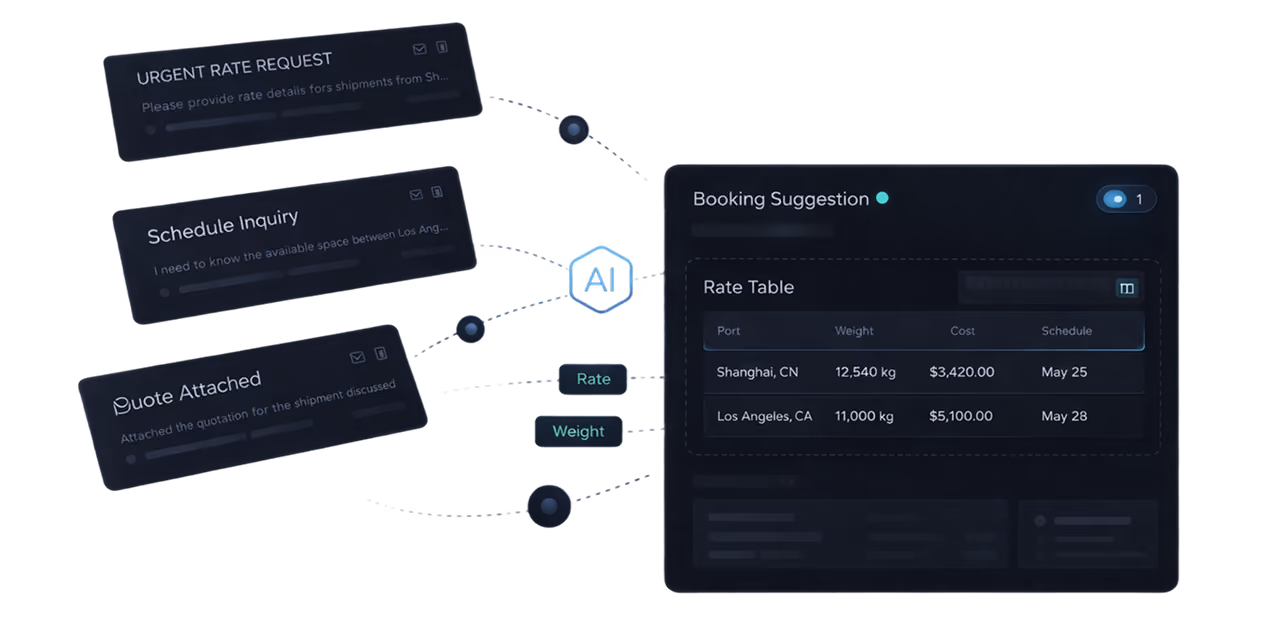
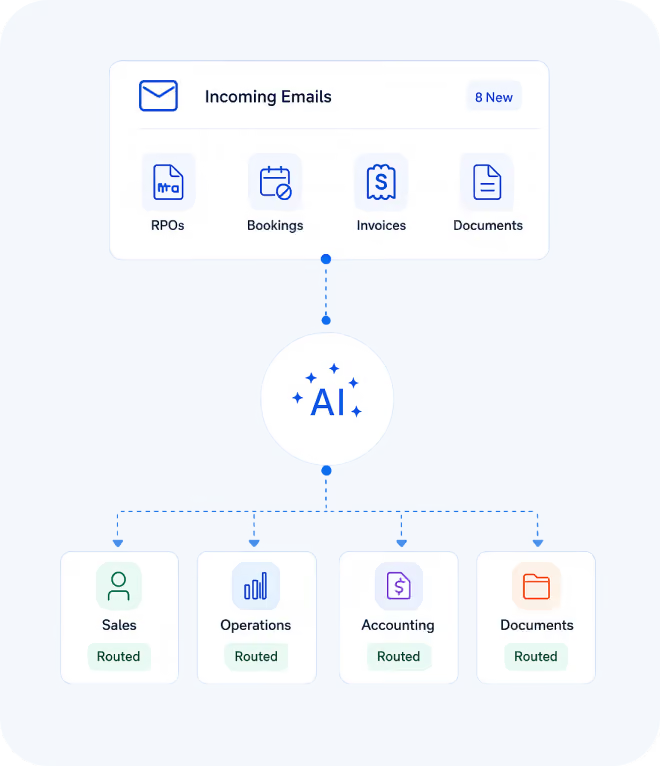
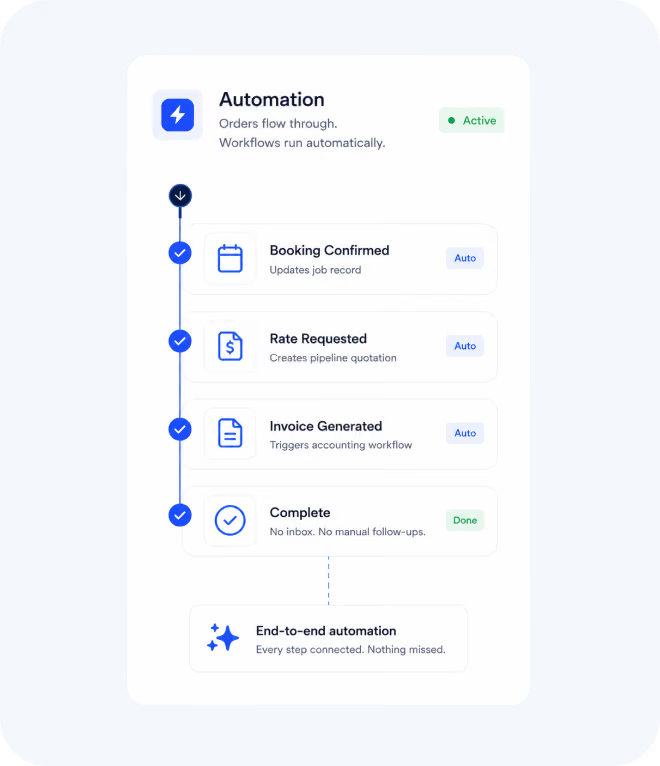
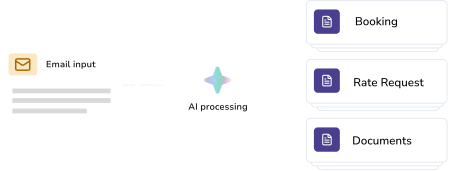
Email Bridge reads incoming emails, identifies intent, and triggers the right action automatically. An RFQ becomes a quote request in your pipeline. A booking confirmation updates the shipment record. A vendor invoice initiates an accounting workflow.
- Emails in.
- Actions triggered.
- Zero manual triage
The Complete Operating System for Modern Logistics
Every module your team needs — unified on one platform, with one login, one data model, and one monthly invoice.


Shipment Management
Accounting & Finance
Sales CRM


Quotation Management


Tariff & Rate Management
Customer Experience Portal


Warehouse Management (WMS)


Vendor Portal

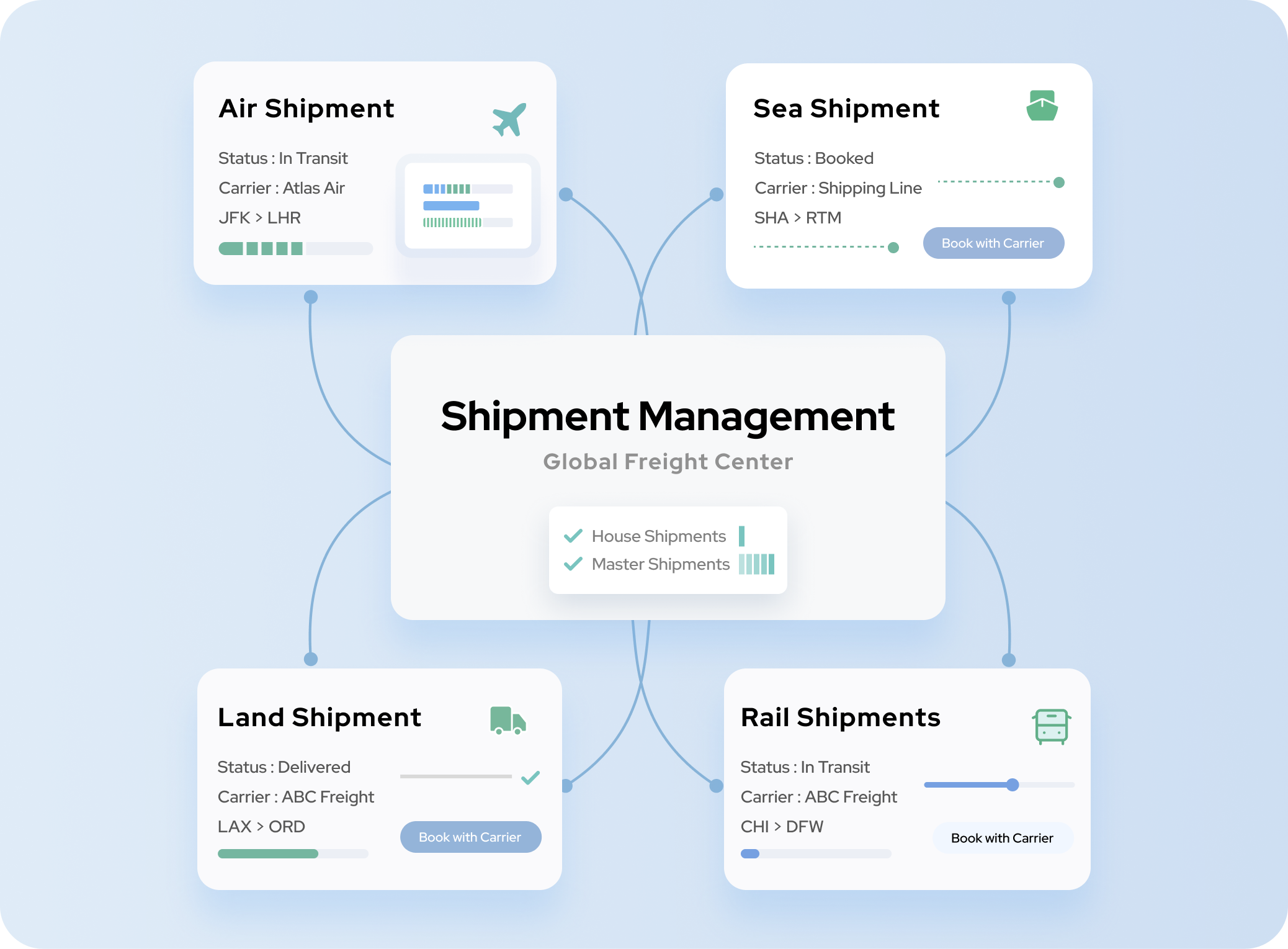
Manage Air, Sea, Road, and Rail Shipments from One Operational View
Air, sea, road, and rail — managed in one view, on one system. Automate end-to-end workflows, track real-time milestones, and handle complex house and master consolidations across every mode without re-entering data.
Key Feature
- Real-time vessel, container, and flight tracking across all modes
- Consol jobs with container visualiser
- CO2 emissions tracking per shipment
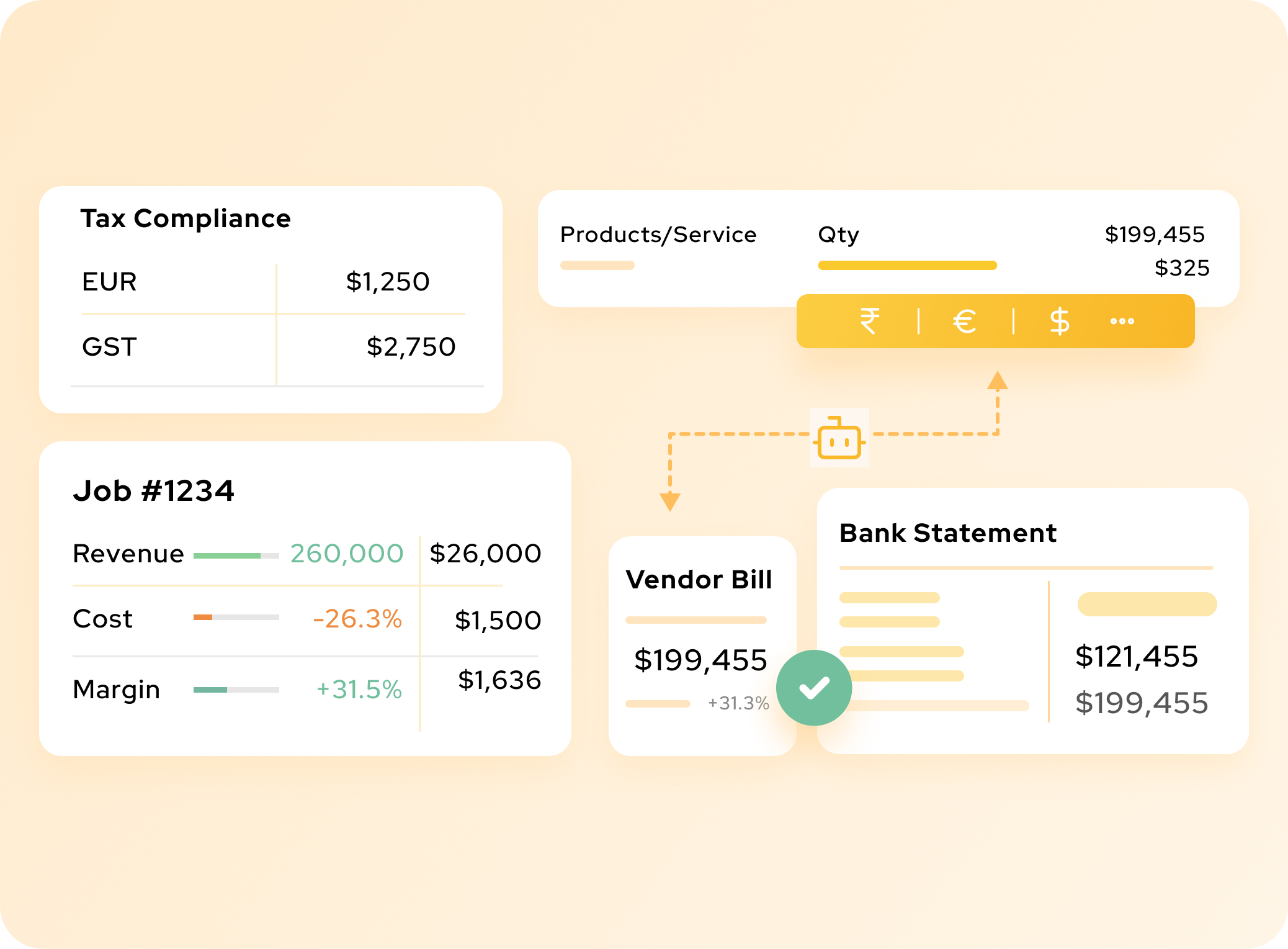
Every Cost Accounted. Every Margin Protected. Built for Freight.
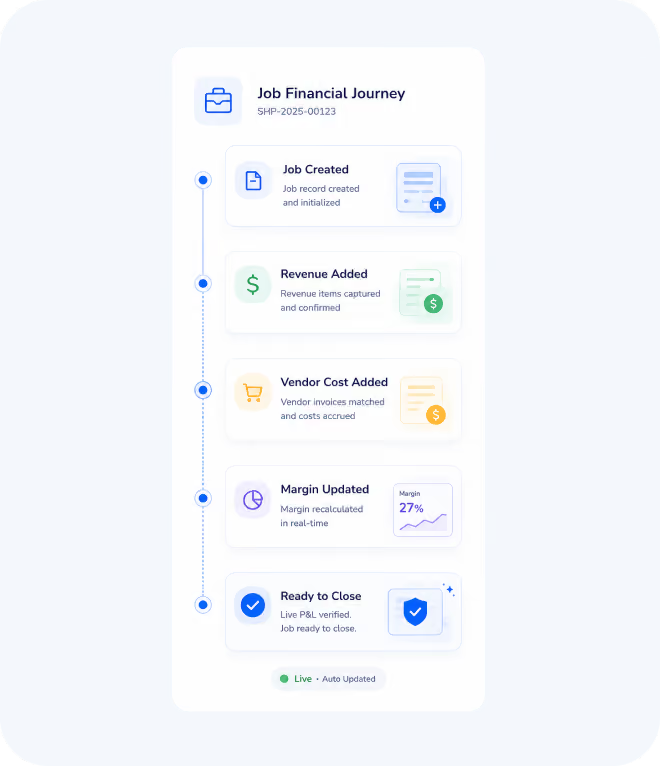
Freight accounting isn't a back-office function — it's where margin is made or lost. Shipthis embeds accounting directly into operations. Every job accrues costs in real time, vendor bills are matched automatically, and invoices generate without re-entry. Multi-currency, multi-entity, GAAP-compliant — and fully reconciled before the job closes.
Key Feature
- Real-time P&L per shipment — revenue, cost, and margin on every job
- Banking integration with automated statement reconciliation
- Native integrations with QuickBooks, Xero, Sage, and major ERP systems
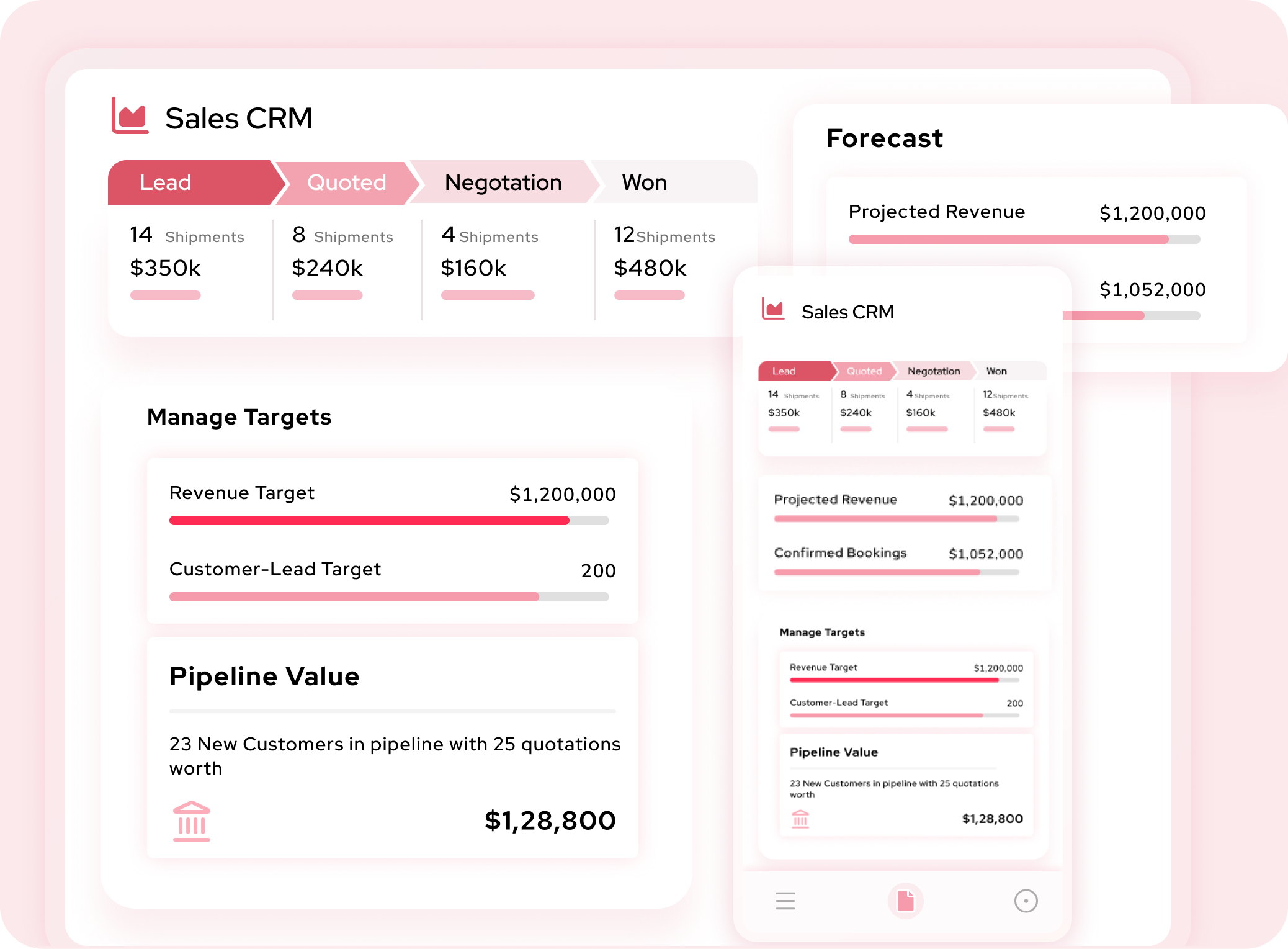
Run Freight Sales with the Context Your Team Actually Needs
Generic CRMs don't understand freight. Shipthis Sales CRM is built around how freight forwarding is sold — trade lanes, shipment volumes, customer revenue, and quoted rates attached directly to every lead and opportunity. Your sales team sees pipeline, targets, and forecast in one view. Your management sees where revenue is being won, and what's at risk.
Key Feature
- Freight-specific pipeline management — trade lanes, volumes, and rates on every deal
- Multiple quote options per RFQ with approval workflow
- Ocean spot rates via CargoFive integration
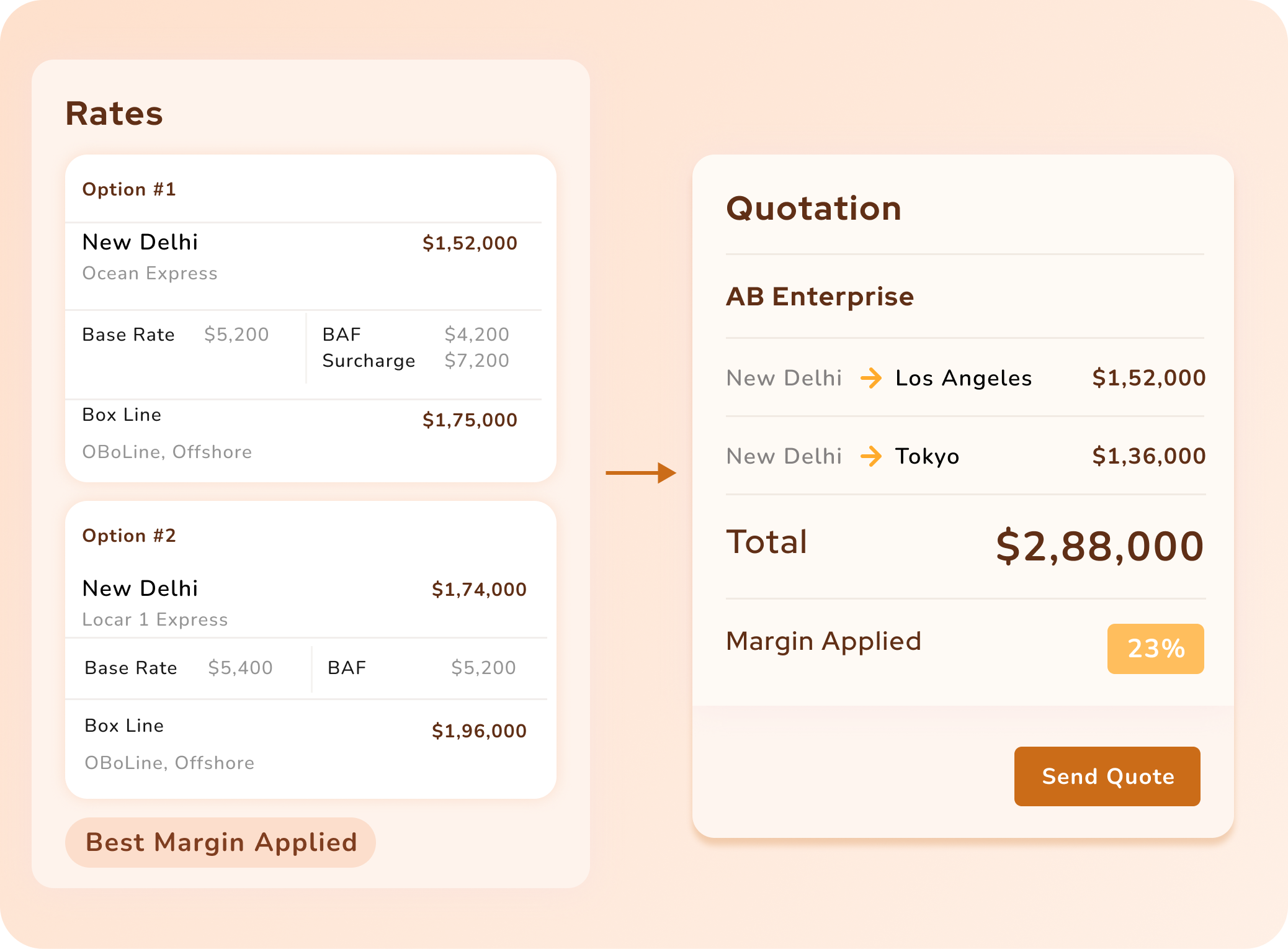
Quote Faster, Win More — From Rate to Proposal in Seconds
Generate accurate multi-leg quotes in seconds — pulling from contracted rates, spot rates, and external providers. Margins calculated automatically, surcharges applied correctly, best option surfaced before you send.
Key Feature
- Multi-channel RFQ capture — email, portal, and WhatsApp
- Multiple quote options per RFQ with approval workflow
- Ocean spot rates via CargoFive integration
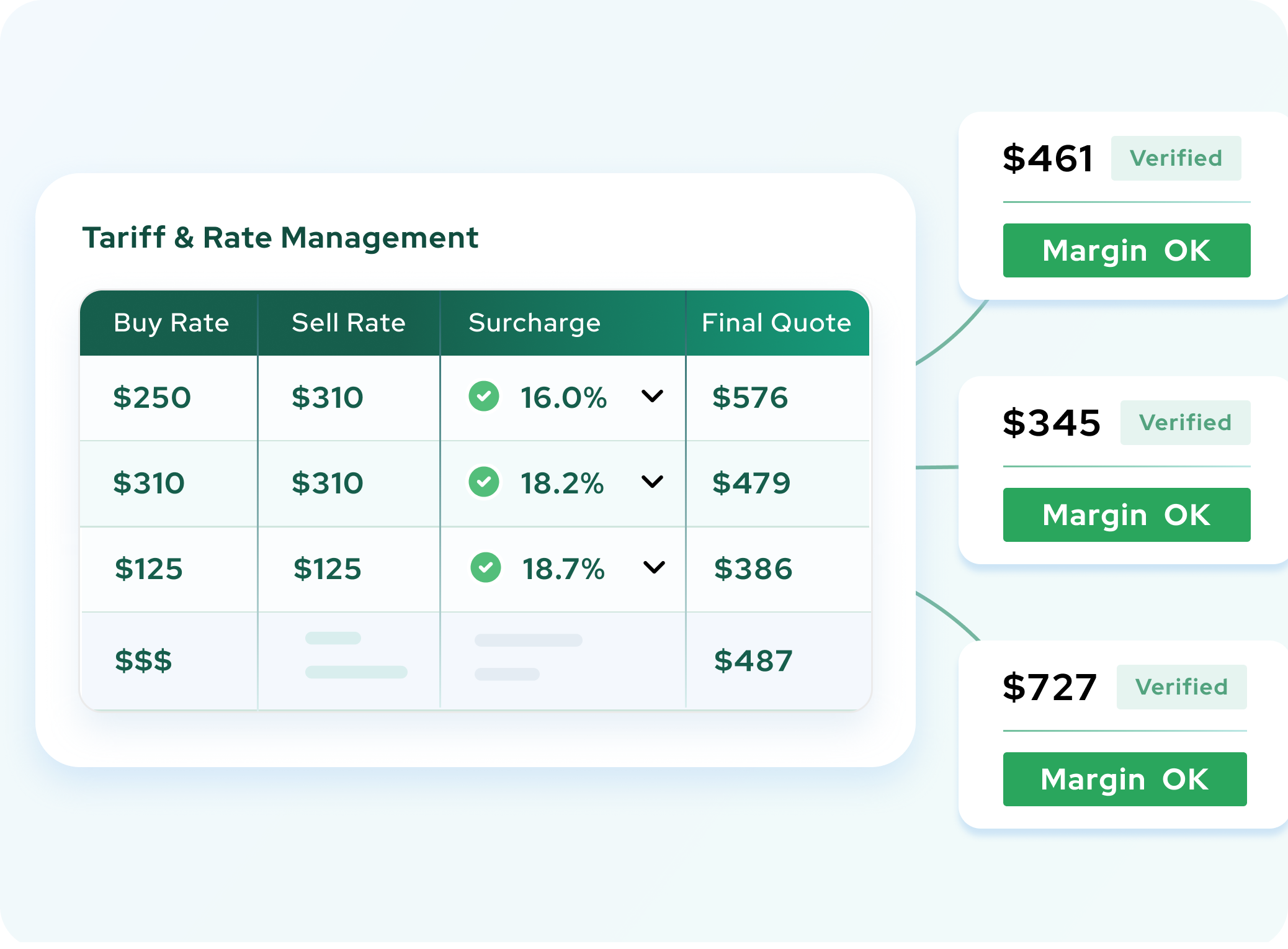
Every Quote Leaves with the Right Margin — Automatically
Centralise buy and sell rates across all modes and carriers — with automatic surcharge detection, margin checks, and AI-powered rate sheet normalisation. Every quote pulls from one verified source.
Key Feature
- Auto-rating with margin assurance
- Customer-specific tariffs with version control
- Rate search across all modes, lanes, and carriers
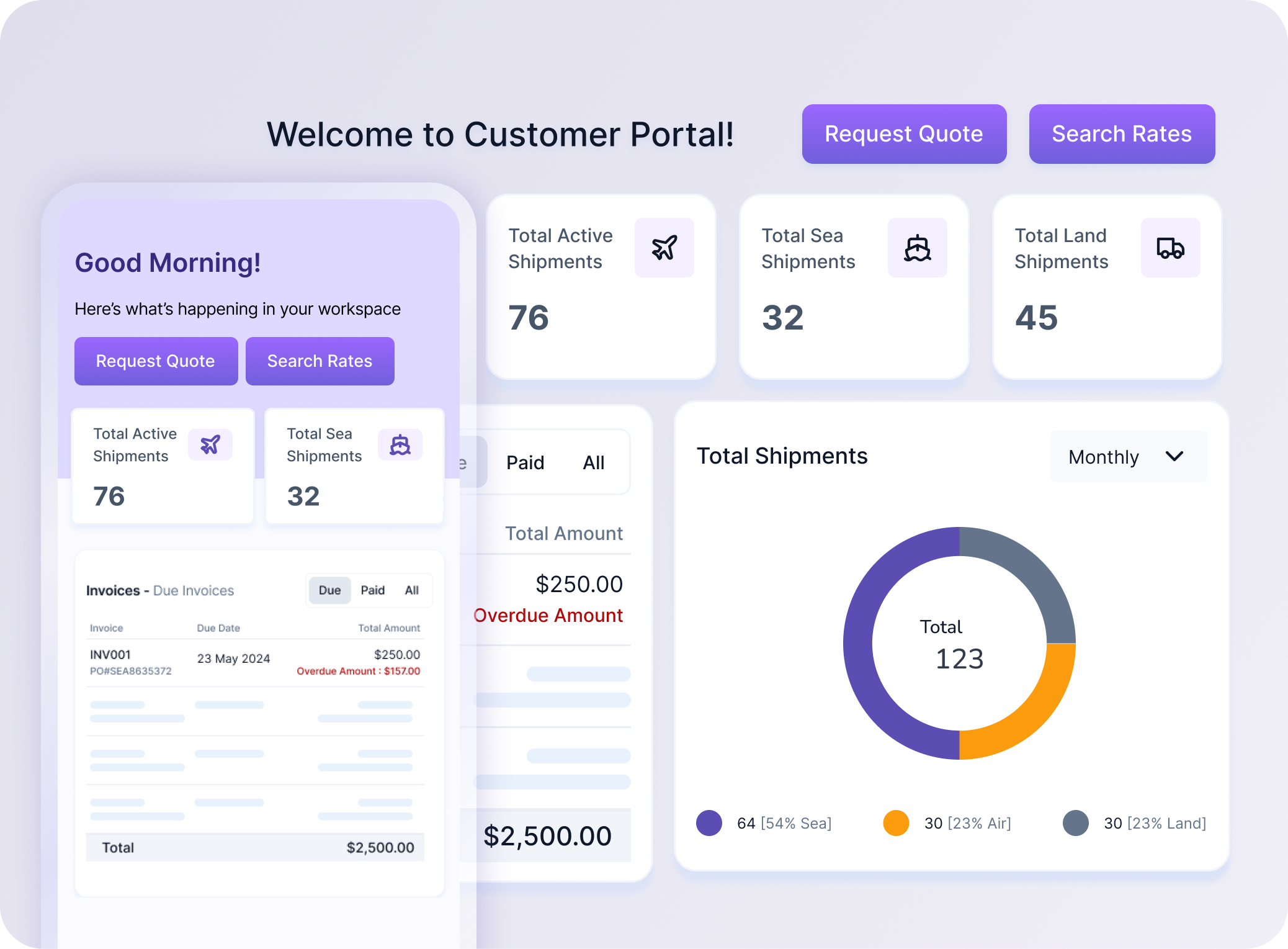
Give Customers Real Transparency, Not Status Emails
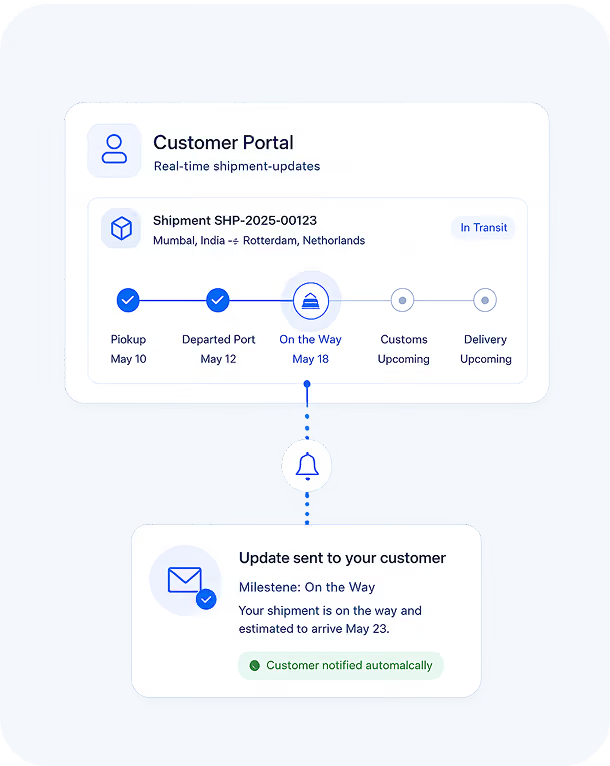
Your customers want to know where their cargo is without calling your team. Shipthis gives them a fully white-labeled portal under your brand — live shipment tracking, instant quote requests, invoice access, and document exchange, available 24/7 on web and mobile. You stop fielding status emails. They get the visibility they expect from a modern freight partner.
Key Feature
- White-labeled portal — your brand, your domain, your experience
- Live shipment tracking across air, sea, and land
- Self-service quote requests and rate search
Warehouse Management That's Part of the Operation, Not Bolted On
Handle receipts, releases, inventory, and bonded cargo — fully integrated with live freight operations, not bolted on as a separate system. Warehouse staff scan and move cargo on mobile. Billing calculates automatically. No separate WMS required, no duplicate data entry.
Key Feature
- Integrated receipt, release, and inventory tracking across aisles, racks, and bins
- Convert warehouse releases directly into shipments — zero re-entry
- Automated warehouse billing — storage, handling, and receiving calculated automatically
.png)
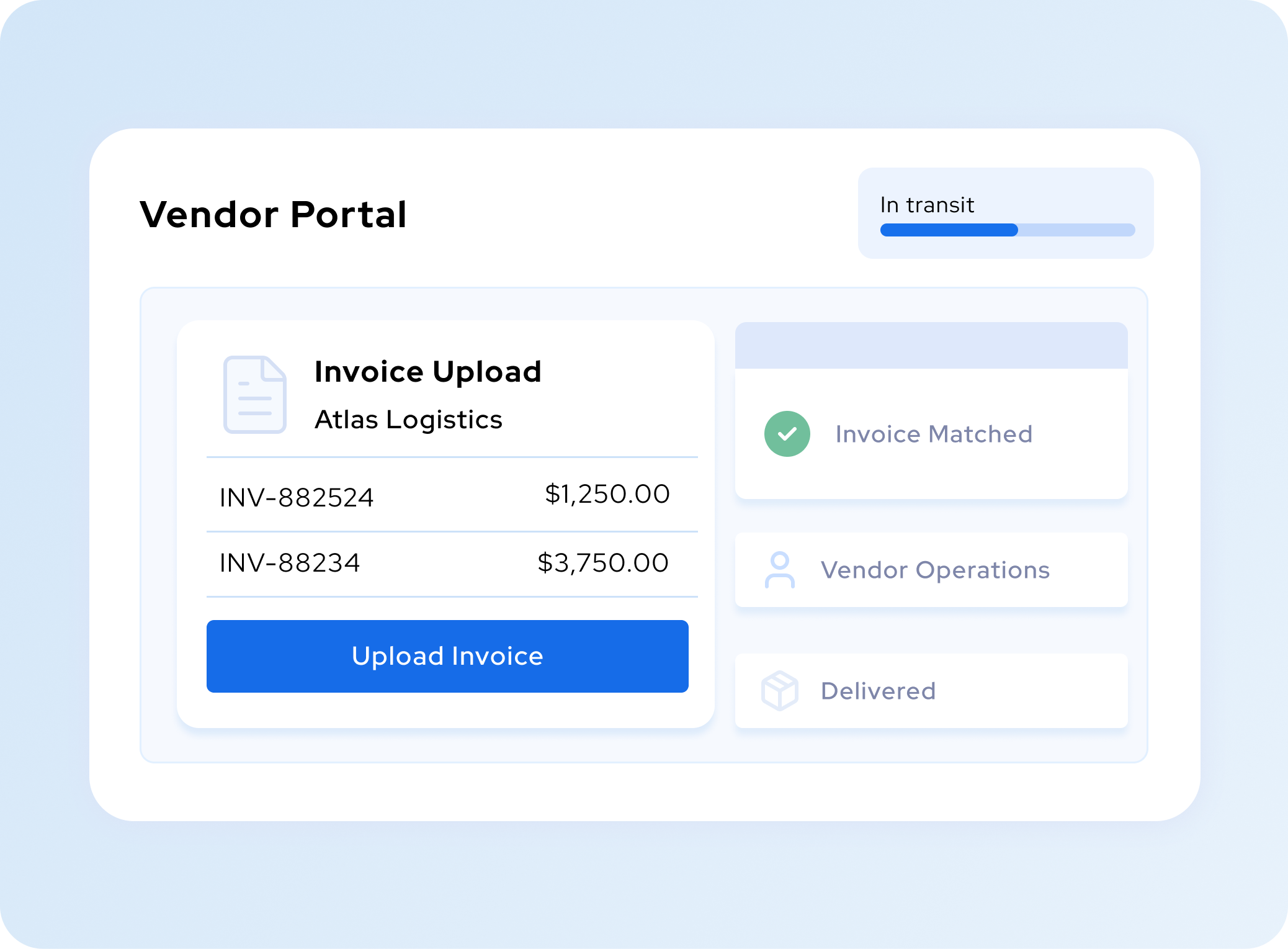
Bring Partners Into the Same System
Digitize collaboration with agents and carriers. Vendors can upload invoices, update milestones, and communicate directly inside Shipthis—eliminating email chains and manual follow-ups.
Key Feature
- Direct invoice upload and automated matching
Proven Impact for Freight Forwarders Across Every Part of Your Operation
Real numbers from freight forwarders running on Shipthis.
Operational Efficiency

Speed & Automation

Scalability
Financial Control
Built for Freight Forwarders. Trusted Across Global Trade.
From digital freight forwarding to accounting, compliance, analytics, and customer portals — Shipthis supports end-to-end freight operations.
Break Free from the Limits of Legacy Freight Forwarding Software
Stop patching together disconnected tools. Shipthis eliminates manual data entry, email overload, and fragmented systems by unifying your entire operation on one intelligent platform.




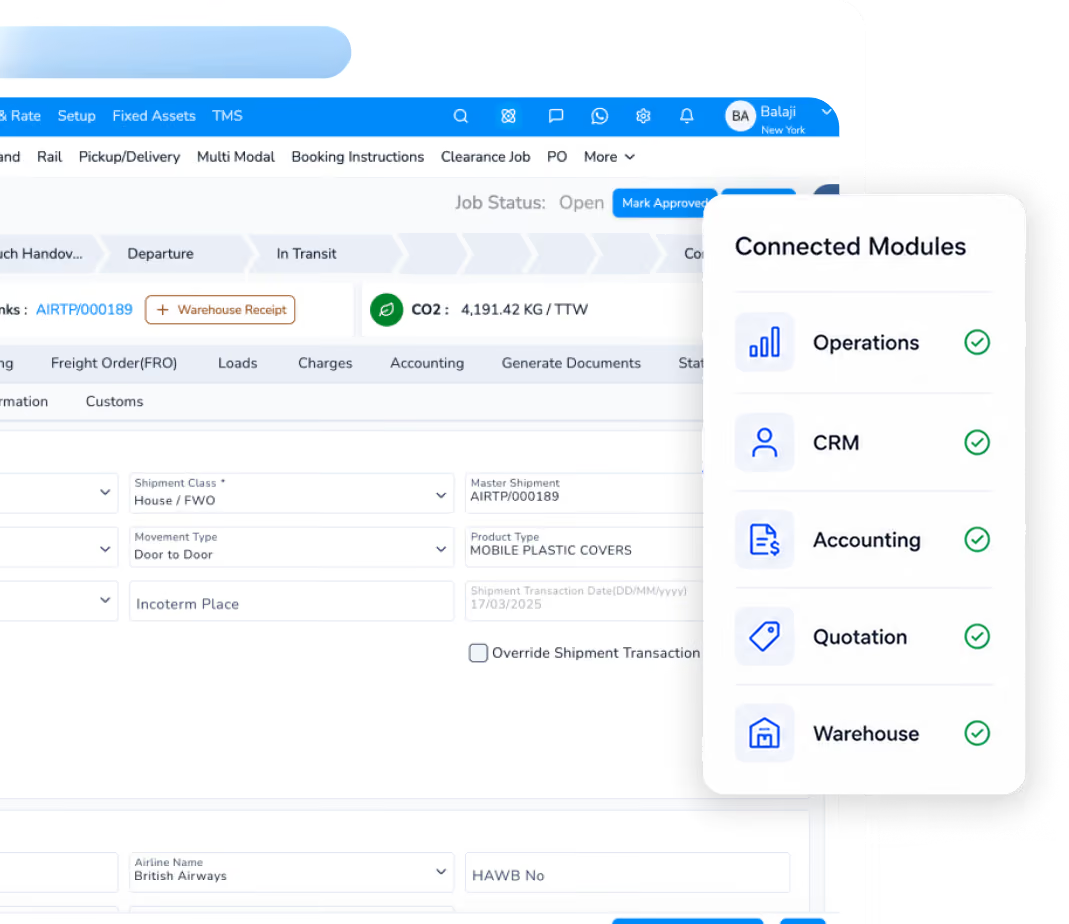

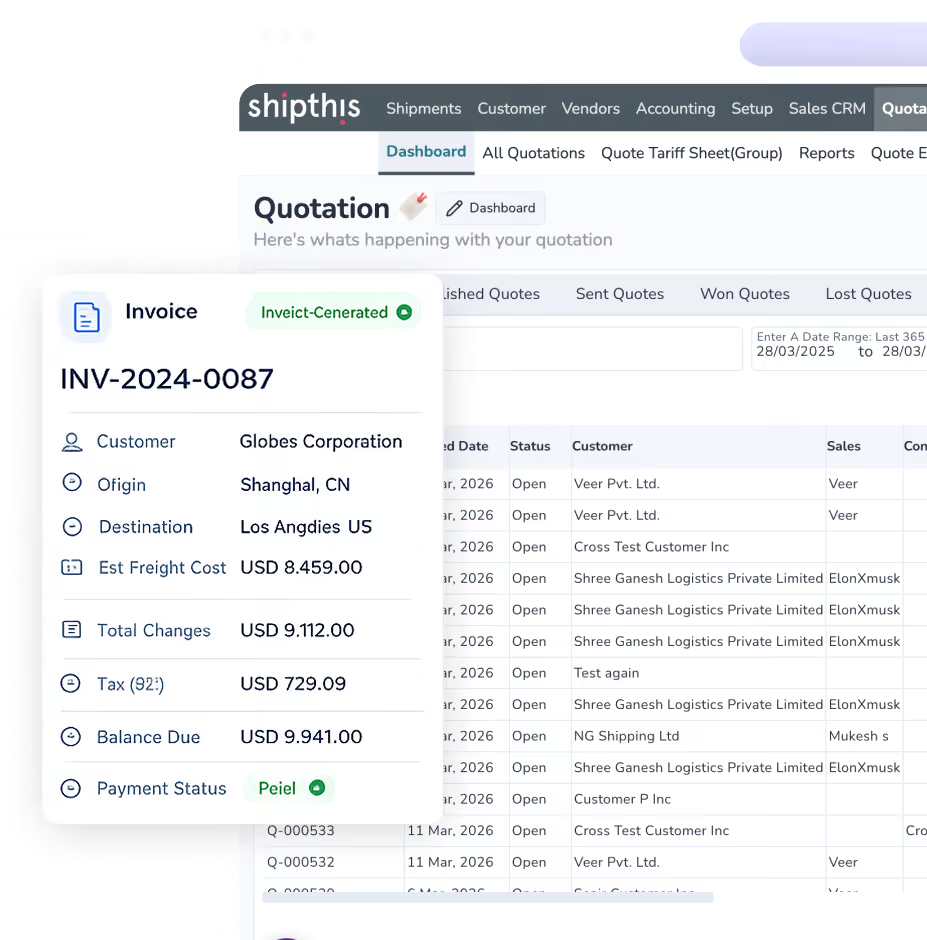

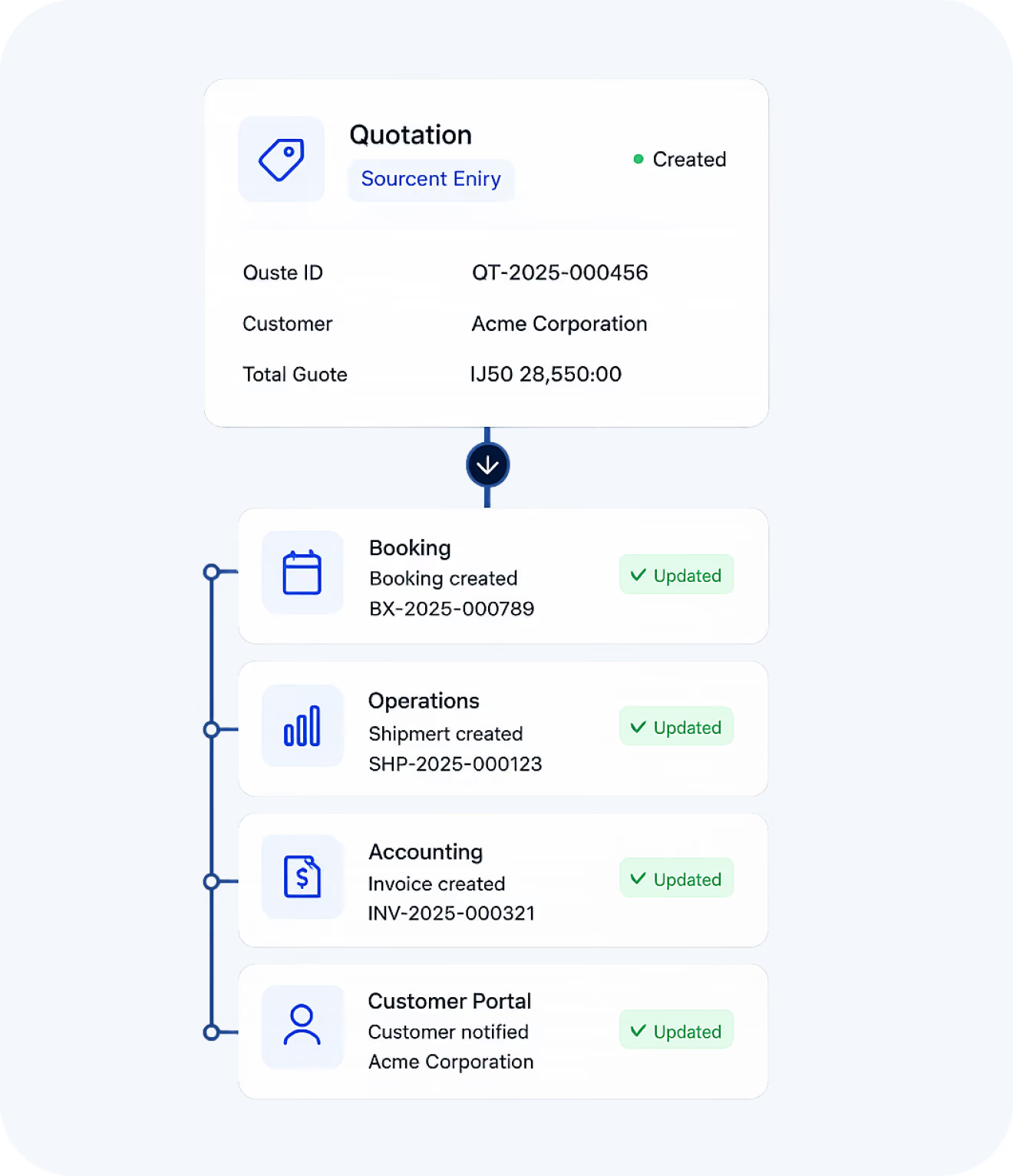
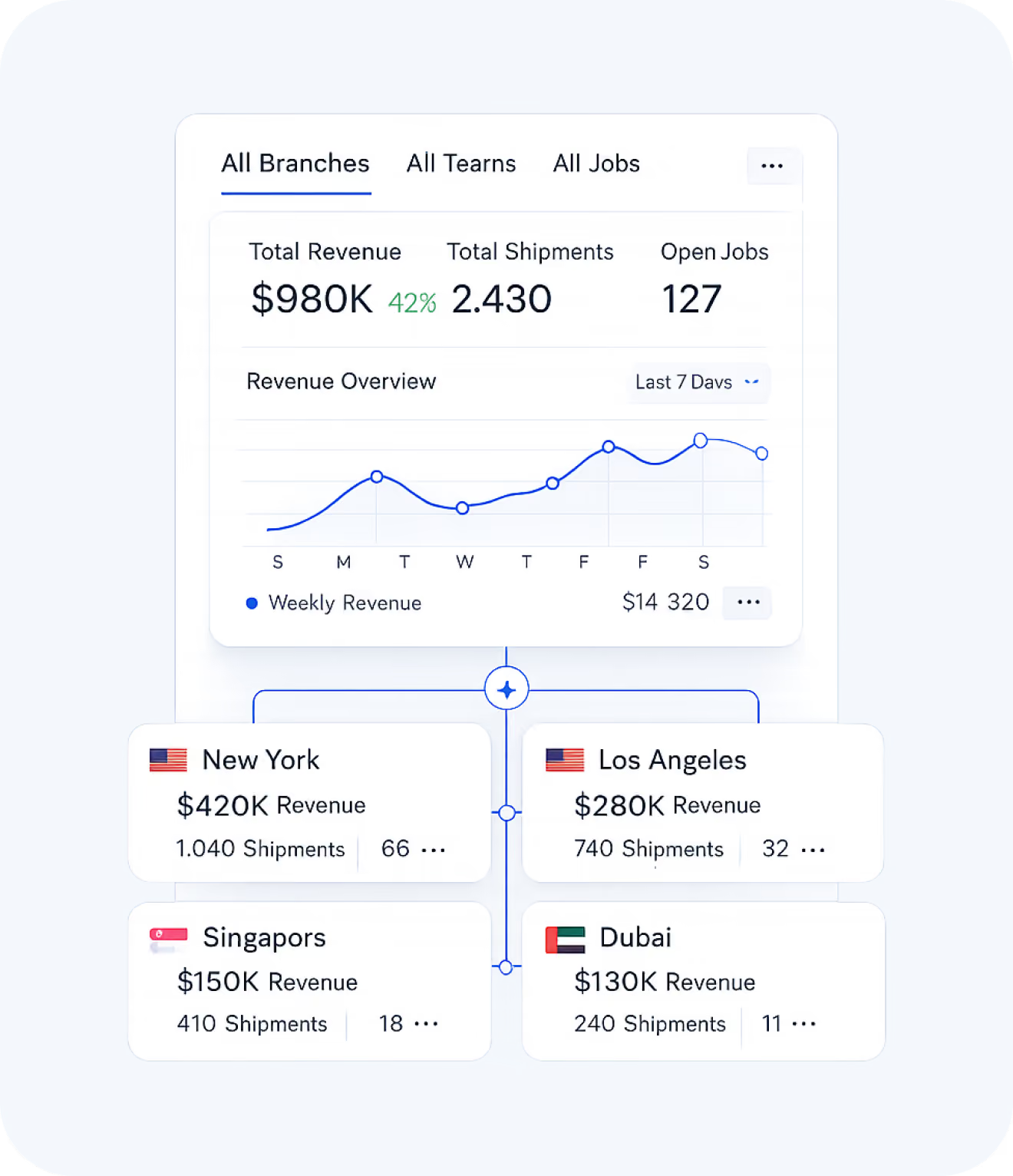
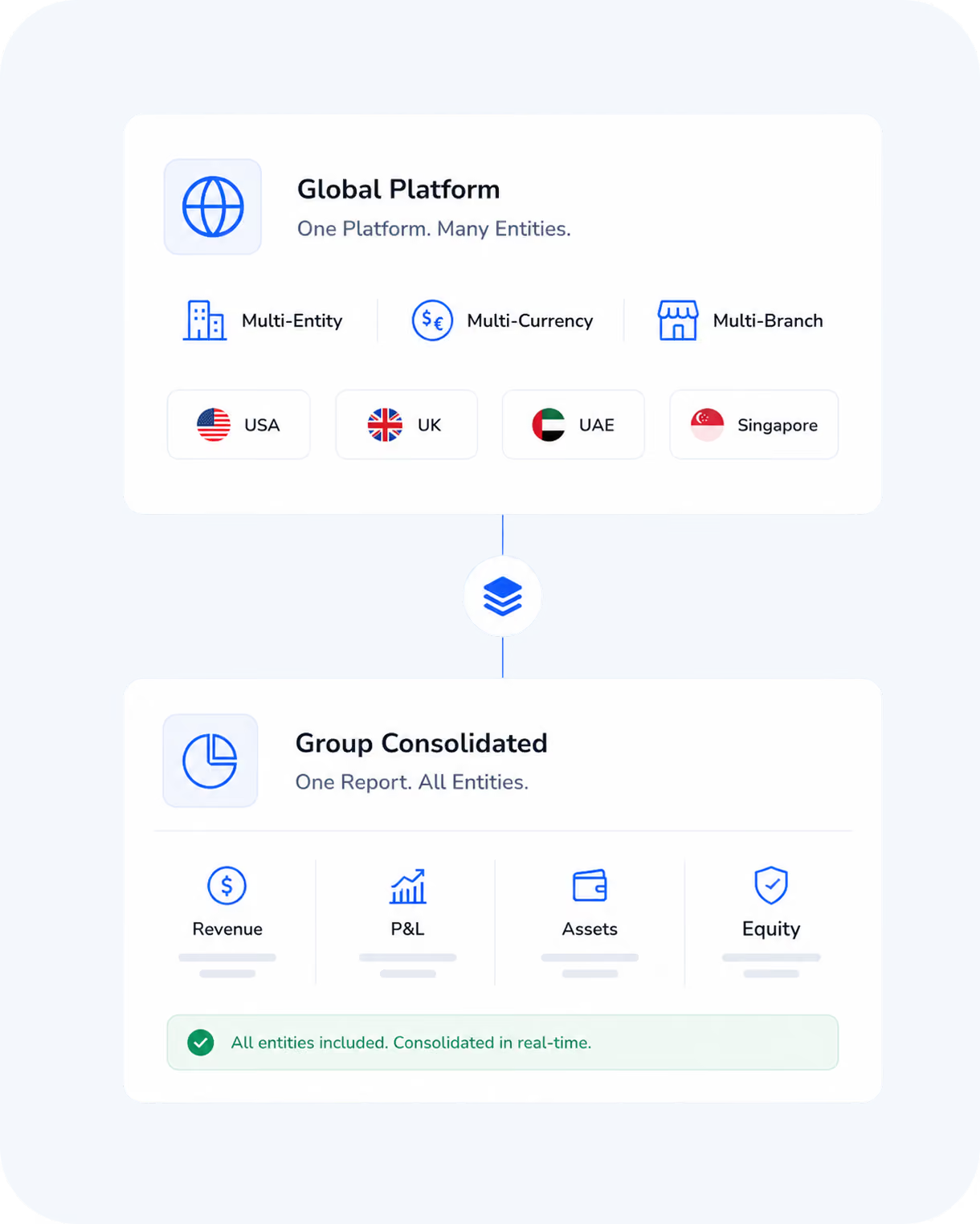



Fragmented Systems & Silos
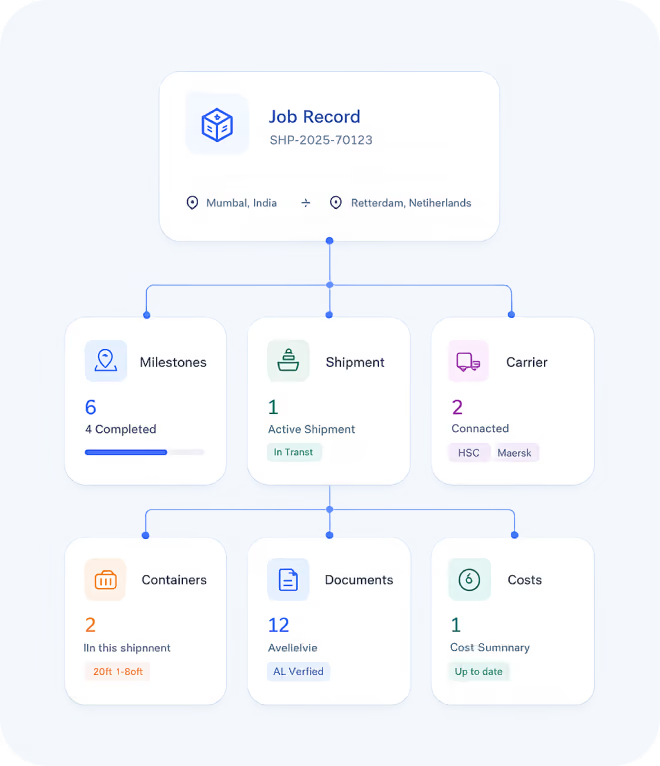
One Truth. One Platform. End-to-End Control.
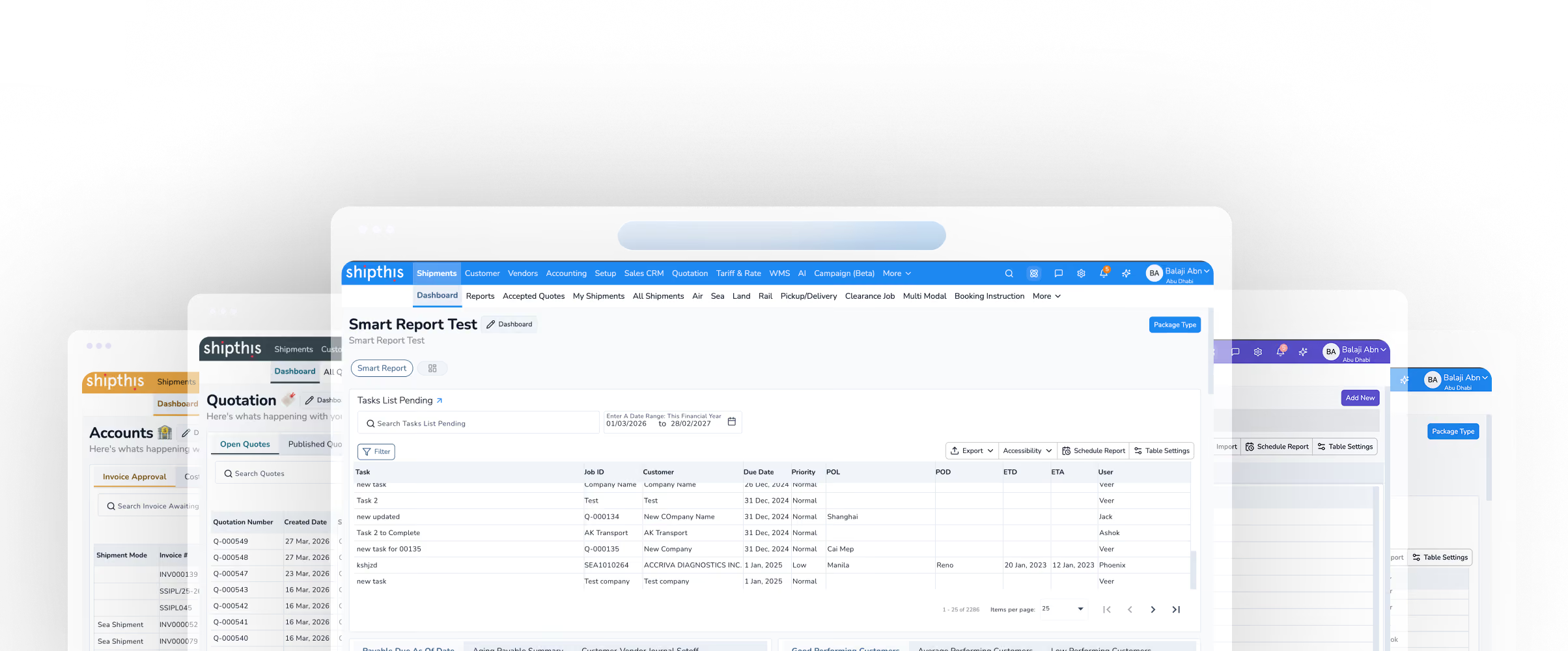


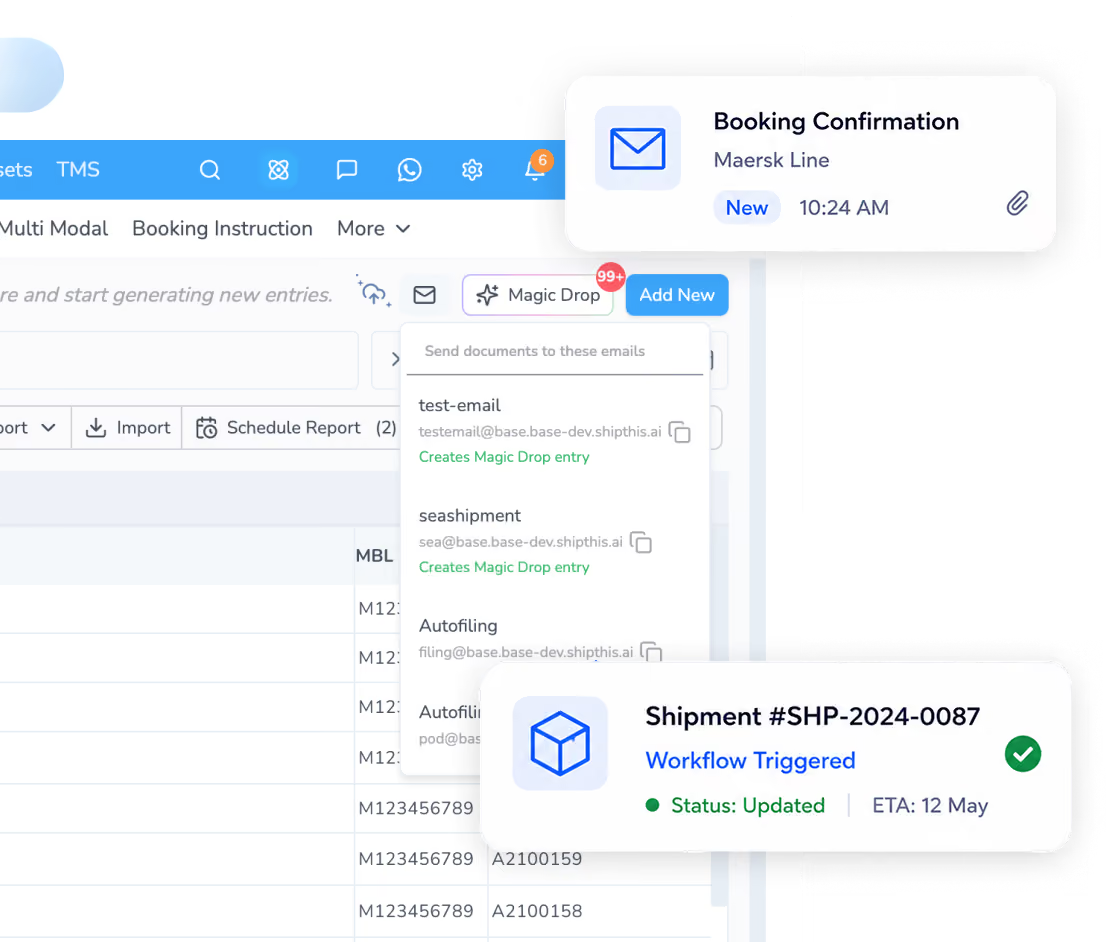
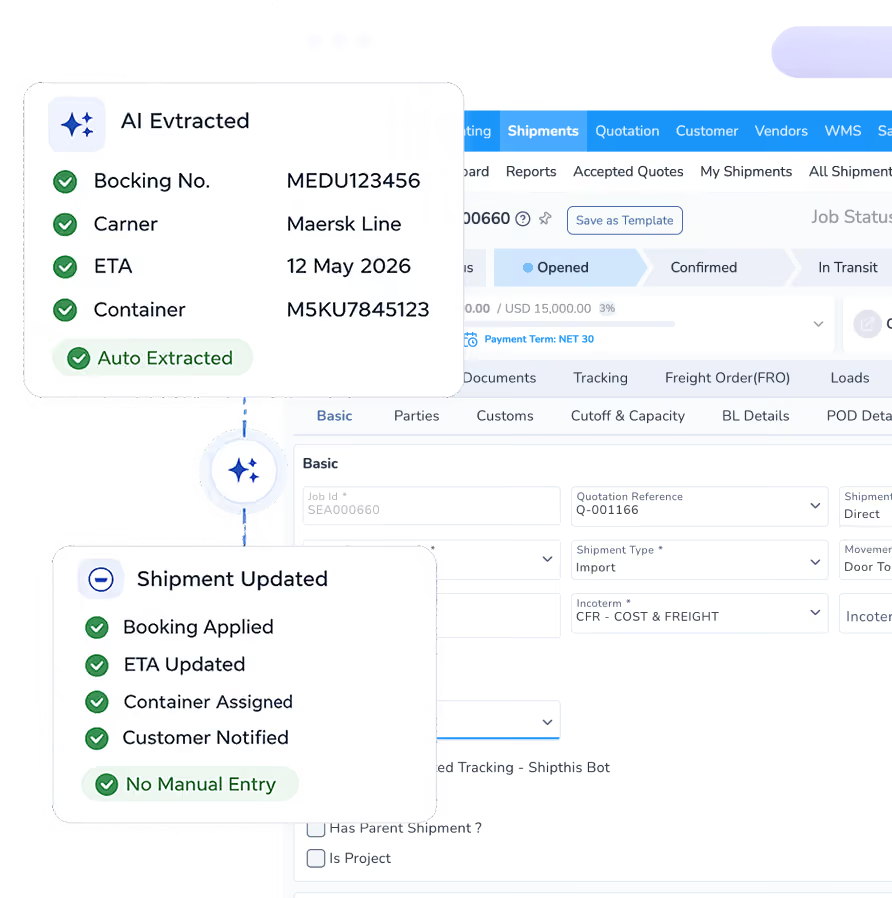
Trapped Data & Email Overload
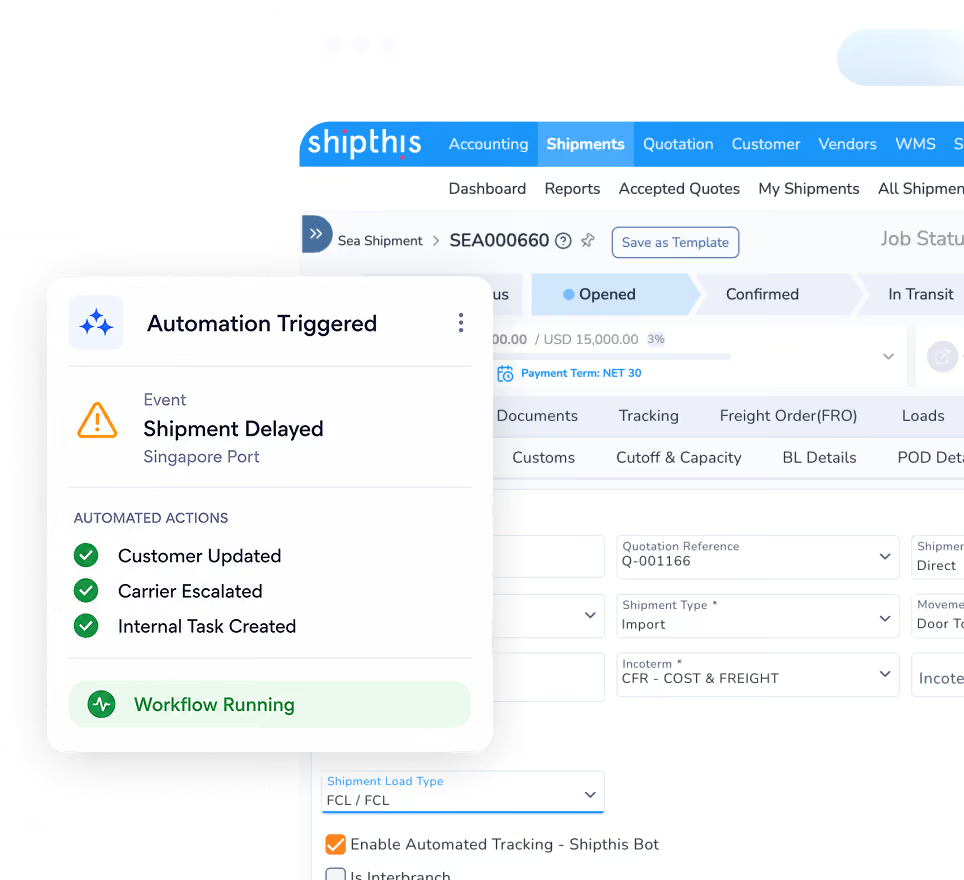
Turn Your Inbox into Automated Workflows.




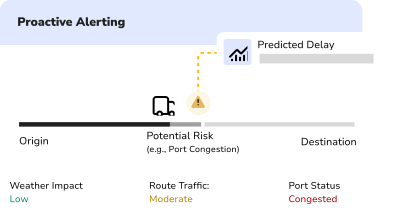
Operational Blind Spots
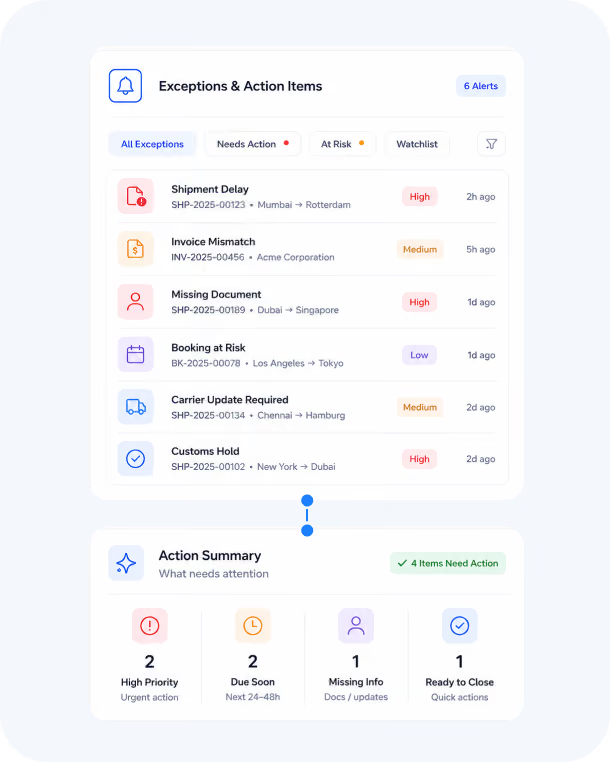
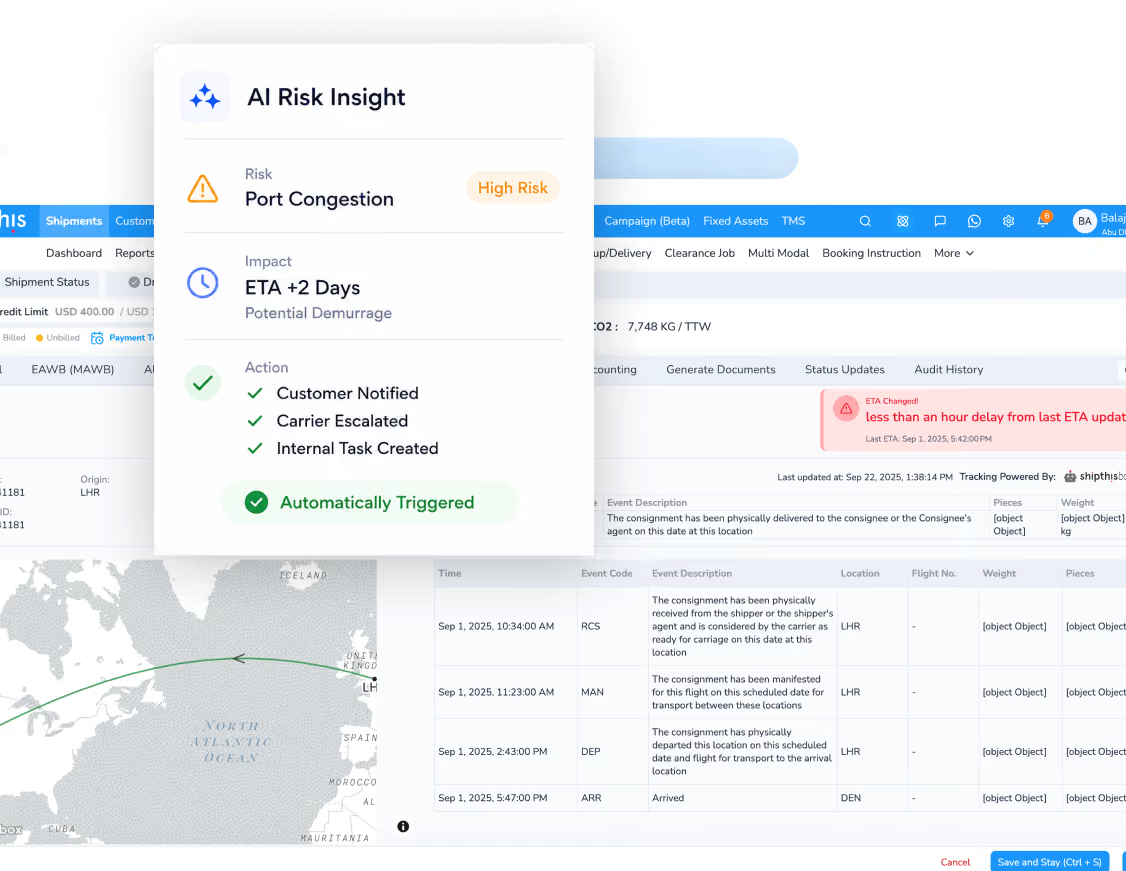
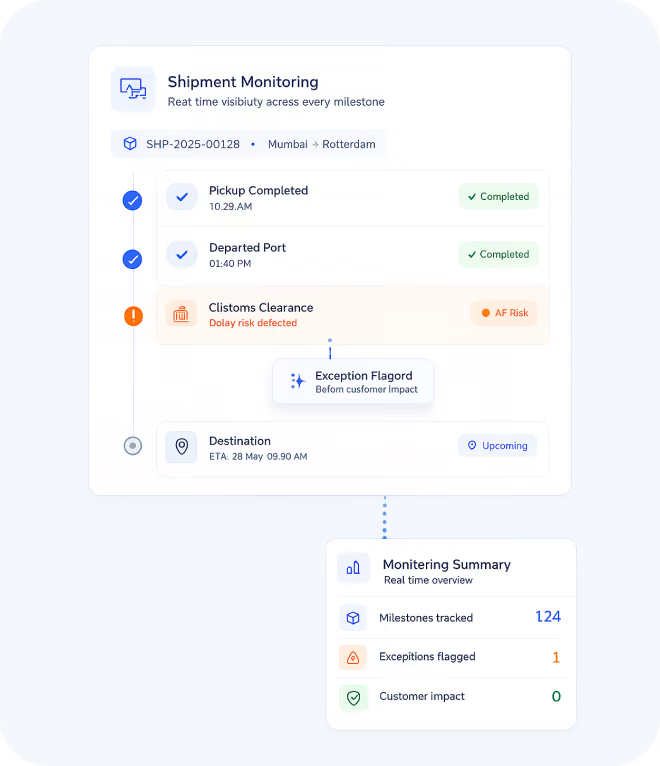
From Reactive Firefighting to Proactive Control.



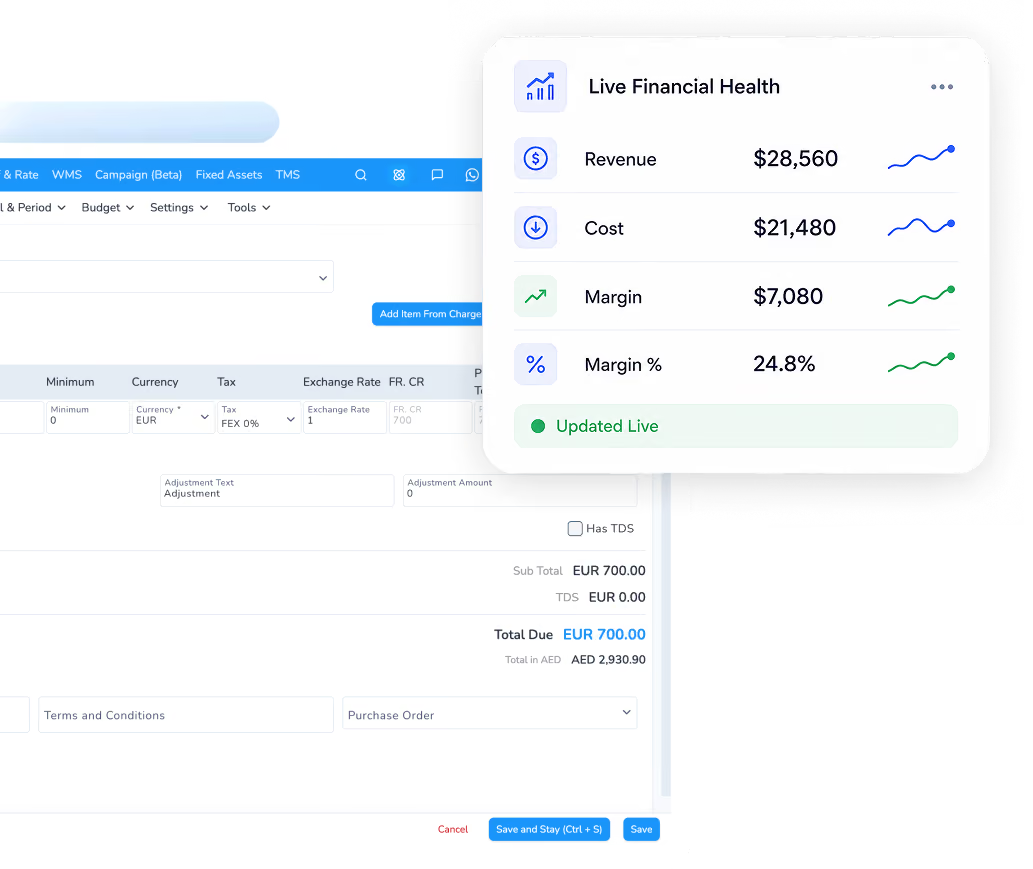

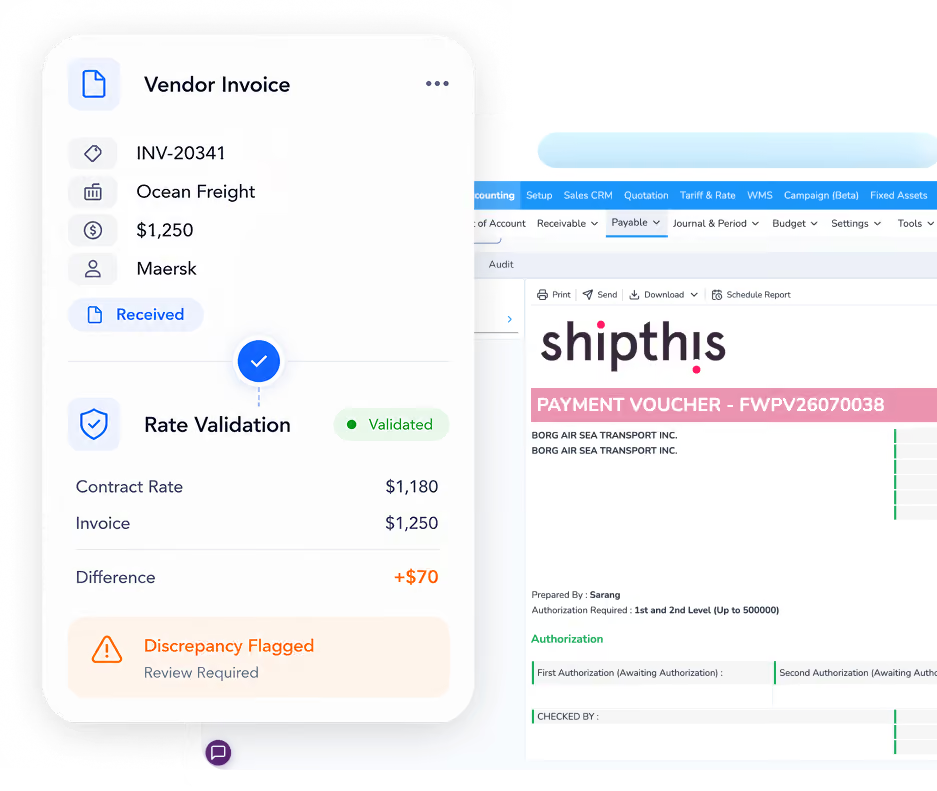
Revenue Leakage & Billing Errors
Zero-Error Accounting and Financial Control.




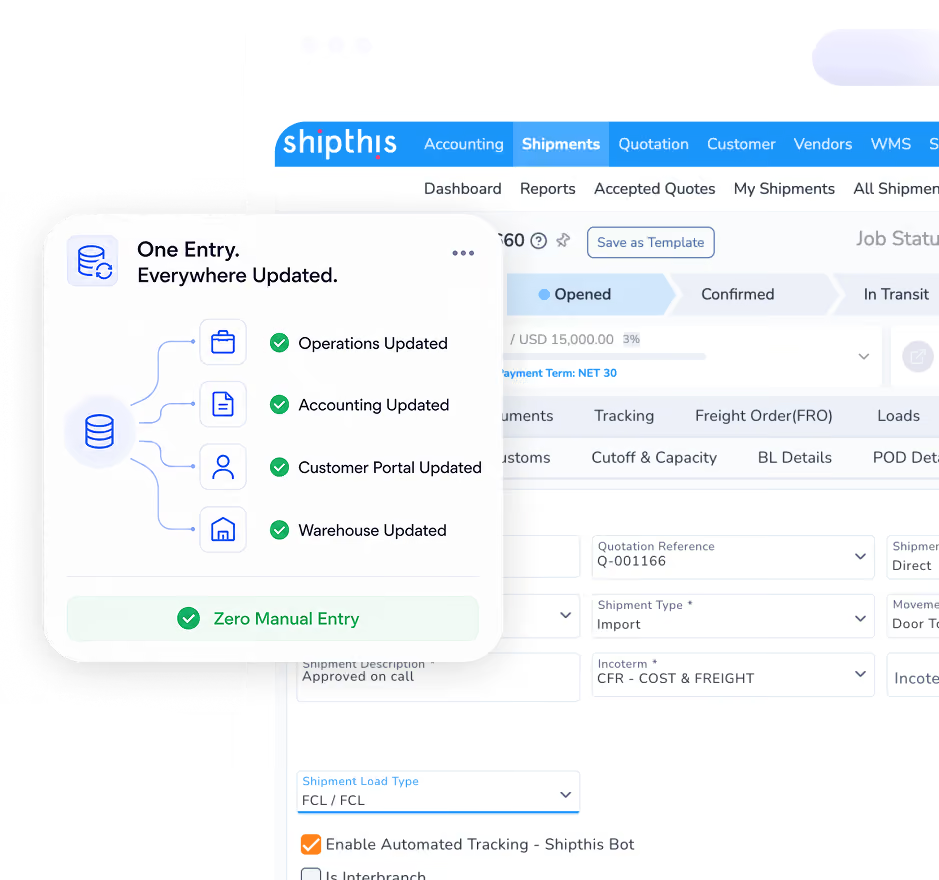
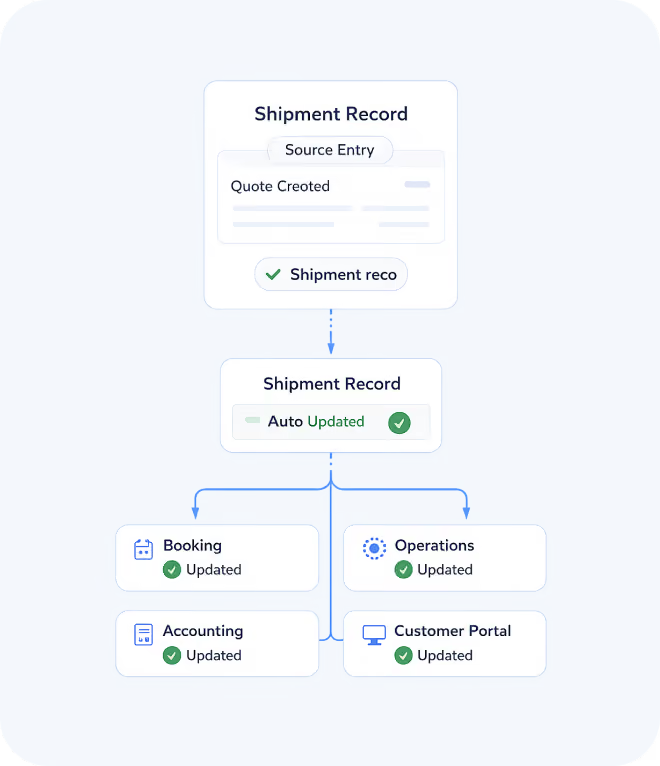
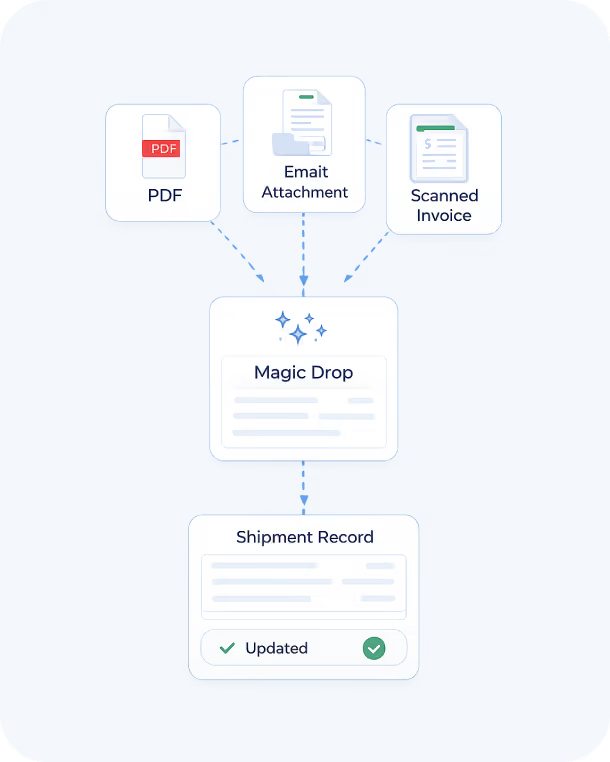
Manual Data Entry Fatigue
Enter Data Once, Use It Everywhere.
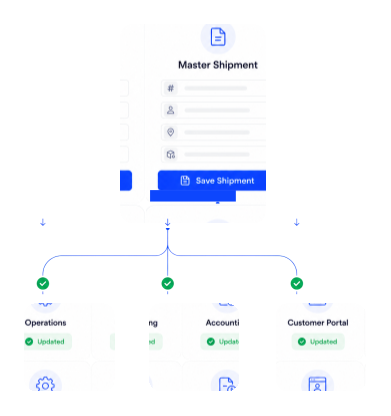
Four reasons the decision becomes obvious.
Faster to go live. Fewer tools to manage. AI that's built in, not bolted on.
One price that doesn't change when your volume does.
Go live in 9 weeks, not 19 months.
Shipthis was built for freight forwarders from day one — not adapted from a generic ERP. Implementation is structured, guided, and fast. Most customers are fully operational within 9 weeks of signing. No six-figure consulting engagements. No 18-month configurations. No parallel-run nightmares.
LEGACY IMPLEMENTATION
 6-18 month configuration
 Six-figure consulting fees
 Parallel-run disruptions
 Certified specialists required
SHIPTHIS IMPLEMENTATION
 Live in 9 weeks, guaranteed
- Structured, guided process
- No business disruption
- Named CSM, full support


Replace five tools with one platform.
The average mid-market freight forwarder runs a separate TMS, accounting software, CRM, customer portal, and rate management tool — each with its own login, its own data, and its own monthly invoice. Shipthis replaces all of them. Data flows end-to-end. Nothing gets lost between systems.
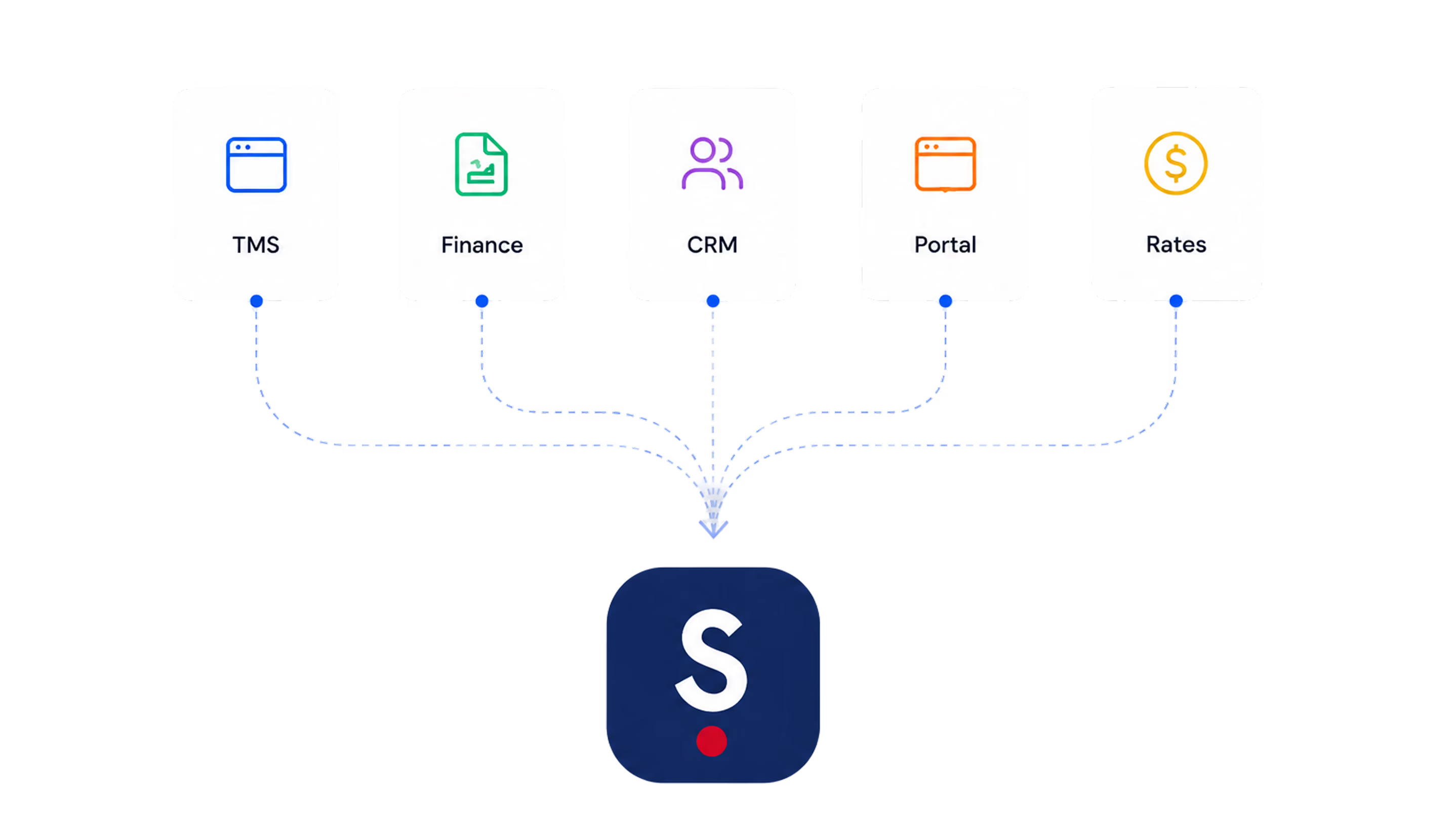
 One login
- One monthly invoice
- One data model
- End-to-end data flow
Built AI-native. Not AI as an afterthought.
Every legacy freight platform is adding AI features. None of them can add AI architecture. AI-native means AI is the foundation the system is built on — reading documents, processing emails, reconciling finances, and predicting pricing outcomes as core platform behaviour, not as a module you enable.
BOLT-ON AI
 AI added after architecture was set
- Separate module to enable and configure
- Doesn't read your live operational data
- Gap widens every year
SHIPTHIS AI-NATIVE
 AI is the operational layer, not a feature
- Runs across every workflow by default
- Reads documents, emails, invoices in real time
- Advantage compounds over time
Platforms built before AI existed can bolt on capabilities. They cannot rebuild their foundation. The gap between bolt-on AI and native AI widens every year.
One price. No surprises.
$89 per user, per month. Every module included. No per-transaction fees. No per-shipment surcharges. No surprise invoices when your shipment volume grows.

 Shipment Operations
- Accounting & Finance
- Sales CRM
- Quotation Management
- Vendor Portal
- Workflow & Automation
- Warehouse Management
- Tariff & Rate Management


The forwarders switching today aren't taking a risk. They're removing one.
Every month on a legacy system is a month your operation runs slower than it should.
The decision isn't whether to modernise — it's whether to do it now or later.
Trusted by logistics teams worldwide
See How Forwarders Scale with Shipthis
Real results from freight forwarding teams that replaced legacy systems with Shipthis.




The New Standard for Customer Experience in Freight
Modernize your operations and give customers the speed, control, and simplicity of a truly digital workflow - from quoting to delivery.
Customers generate rates, choose options, and confirm shipments themselves — no emails or back-and-forth.
.avif)
Let customers follow every shipment with real-time milestones and updates from start to finish.

Customers access documents, share files, and collaborate securely inside the portal — without long email threads.
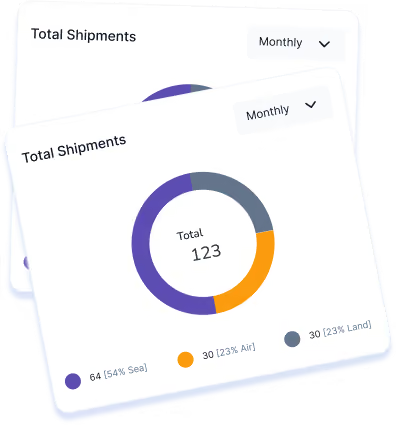
Give customers timely alerts, reports, and insights so they act early and avoid delays.
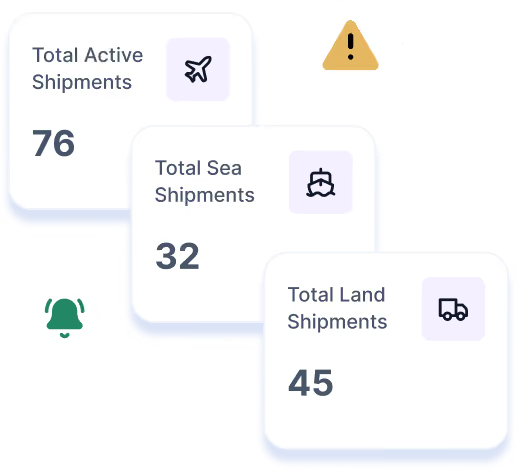
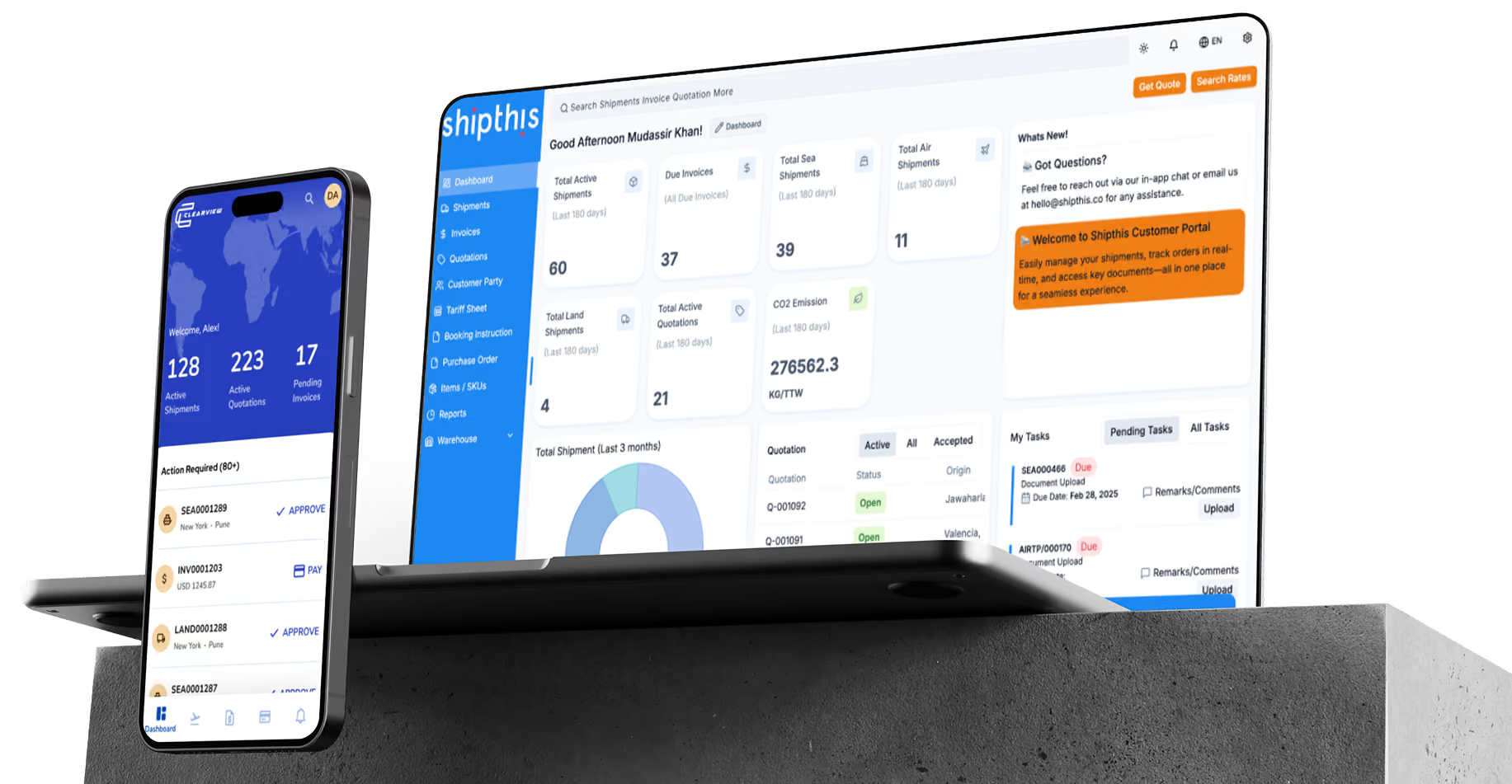
Your Brand. Their Control.
Deliver a modern, self-service portal fully branded as your own - so customers manage shipments on web or mobile, anytime, anywhere.
Total Connectivity. Zero Silos.
Shipthis connects your carriers, banks, government systems, customers, and legacy software into one continuous operational flow — through open APIs, EDI, and real-time data feeds. Your data moves. Your team doesn't have to move it.
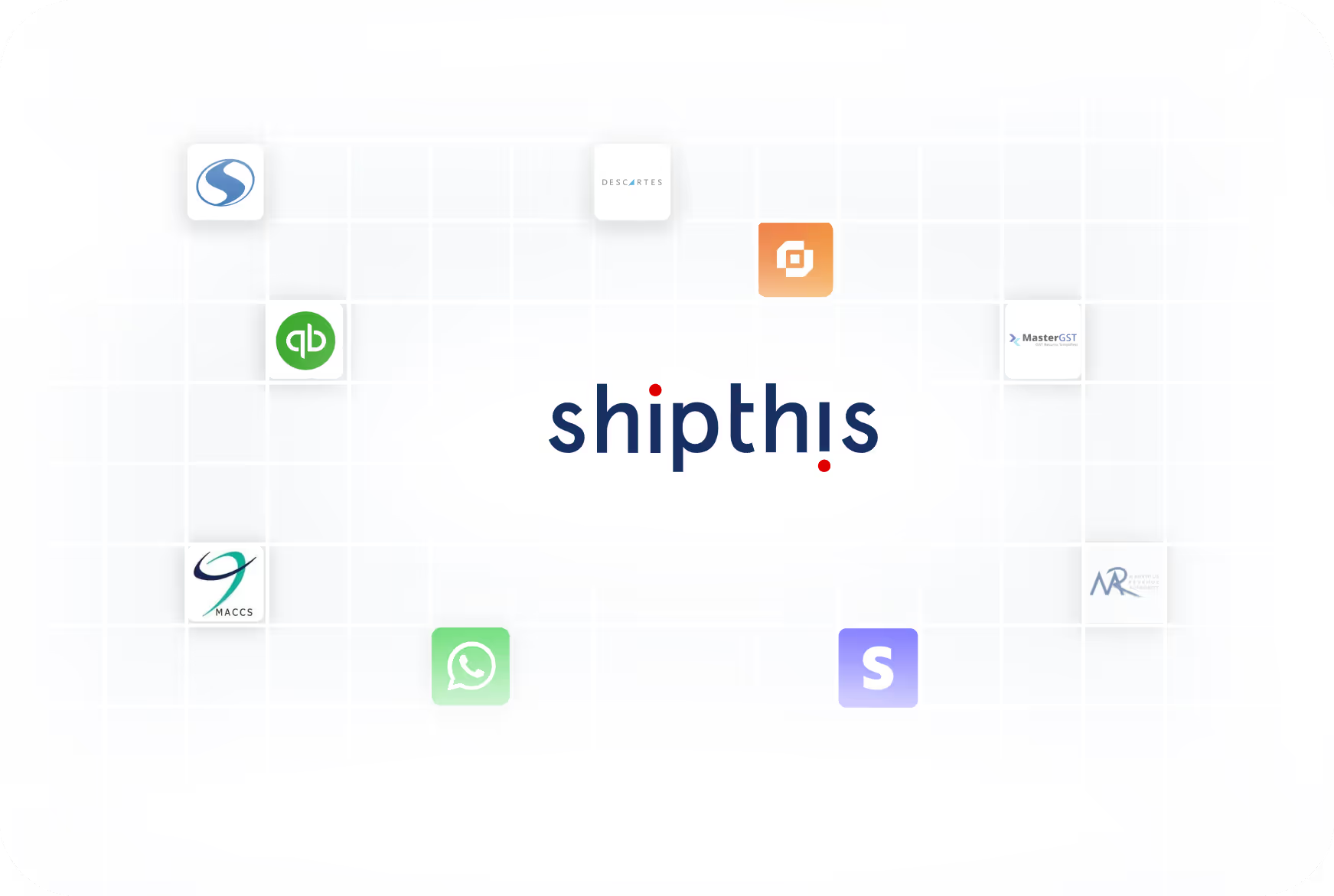

Build on Shipthis. Connect Anything.
Expose shipments, rates, invoices, warehouse data, and milestones through clean REST APIs and real-time webhooks — so every connected system stays in sync, automatically.
Live Carrier Data, No Manual Chasing.
Direct feeds from airlines, shipping lines, port systems, and carrier networks through native EDI — live milestone updates without your team checking carrier portals one by one.
Reconciliation and Compliance, Automated.
Automated bank reconciliation, tax reporting, and regulatory submissions — including GST, ZATCA, and e-invoicing mandates — without the paper chase.
Modernize Without the
Rip-and-Replace.
Connect Shipthis to your existing ERP or legacy systems through open integrations — no risky migration project. Modernize at your own pace, one workflow at a time.
Reliable, extensible infrastructure for every connection.
Adapt Shipthis to your ecosystem with flexible integration options.
See the latest in Freight Forwarding from Shipthis
Logistics insights, trends, and expert takes.





Frequently Asked Questions
Quick answers to common questions about onboarding, pricing, integrations, and security.
Yes. By eliminating manual data entry, consolidating multiple tools into one platform, and automating document processing and financial reconciliation, Shipthis customers typically see a 70%+ improvement in operational efficiency. Teams regularly handle 2x to 3x more shipment volume without adding headcount. Built-in margin tracking and real-time cost accruals also catch revenue leakage before jobs close — recovering money that typically disappears in the billing cycle.
Shipthis is $89 per user, per month. Every module is included: freight operations, accounting, CRM, quoting, customer portal, warehouse management, and AI capabilities. There are no per-transaction fees, no per-shipment surcharges, and no module add-ons. A 25-user team pays $2,225 per month — for the complete platform.
Yes. Shipthis is cloud-hosted on enterprise infrastructure with end-to-end encryption, role-based access controls, regular penetration testing, and automated backups. The platform supports GST, VAT, ZATCA, and multi-country customs compliance natively. ISO 27001 and SOC 2 Type II certifications are currently in progress, targeting Q3 2026. For security questionnaires or detailed compliance documentation, contact our security team directly.
Yes. Shipthis is a direct alternative to CargoWise, Magaya, and GoFreight — and to legacy in-house freight systems built before AI became capable.
All four platforms manage freight operations. Where they differ is architecture, pricing, and AI depth.
CargoWise charges per transaction and per module — costs that compound as shipment volume grows. Magaya and GoFreight serve similar mid-market segments but were built before AI-native automation was possible. Shipthis is built AI-native from the ground up: document processing, email automation, and financial reconciliation are embedded into every workflow — not added on top.
On pricing, Shipthis is $89 per user per month with every module included — operations, accounting, CRM, quoting, customer portal, warehouse, and AI. No per-transaction fees. No module add-ons.
On implementation, Shipthis customers go live in 8 weeks. For a full comparison, see how Shipthis compares to CargoWise, Magaya, and GoFreight →
Most Shipthis customers are fully operational within 8 weeks of signing. Implementation includes data migration, system configuration, workflow setup, and team training — guided by a dedicated implementation team. We have structured implementation programs built from 100+ deployments across freight forwarders, NVOCCs, customs brokers, and 3PLs.
Yes. Shipthis is built for multi-branch, multi-entity, multi-currency operations from the ground up. You can run separate branches with their own P&Ls, user access controls, and reporting — all visible from a single centralized dashboard. Branches can operate independently while management has full cross-entity visibility.
Shipthis serves freight forwarders across the Americas, Middle East, South Asia, and Southeast Asia. The platform supports regional tax compliance including GST (India), VAT (UAE, UK, EU), and ZATCA (Saudi Arabia). Customs documentation and trade compliance workflows are configurable by country and trade lane.
Yes. Shipthis integrates with 120+ carriers and tracking networks across air, sea, and road. Banking integrations support direct feeds for automatic reconciliation and payment processing. Government system integrations cover customs filing, eAWB submission to airlines, and regulatory reporting. REST APIs and webhooks allow custom integration with any third-party system.
Yes. Shipthis is purpose-built for freight forwarders, NVOCCs, customs brokers, and 3PLs. NVOCC workflows include HBL/MBL management, bill of lading issuance, FCL/LCL job management, and agent network coordination. Customs broker workflows include trade compliance, HS code management, duty calculation, and customs document generation.
Every Shipthis customer has access to a dedicated customer success team, product documentation, in-platform support, and a training library. We offer structured onboarding programs and ongoing support to ensure your team is fully operational — and continues to get value as your business grows.
Shipthis is designed for freight forwarders in the 20–500 employee range, managing between 500 and 50,000 shipments per month. If you are below that range and growing, speak with our team — we can advise on fit and timing.
For enterprise and multi-country deployments, we bring in a specialist implementation governance partner to work alongside our team and yours. They take the lead on project management, requirement gathering, cross-functional coordination, and risk oversight, so you get a dedicated layer of execution accountability from day one.
This model is designed for clients where timeline discipline and stakeholder alignment are non-negotiable. It keeps decision-making fast, reduces gaps between your business and technical teams, and gives your go-live the focused governance it needs.
If your project warrants this approach, we'll introduce the right partner early in scoping — before a single requirement is written.
Yes. Shipthis is built for multi-branch, multi-entity, multi-currency operations from the ground up. You can run separate branches with their own P&Ls, user access controls, and reporting — all visible from a single centralized dashboard. Branches can operate independently while management has full cross-entity visibility.
Shipthis serves freight forwarders across the Americas, Middle East, South Asia, and Southeast Asia. The platform supports regional tax compliance including GST (India), VAT (UAE, UK, EU), and ZATCA (Saudi Arabia). Customs documentation and trade compliance workflows are configurable by country and trade lane.
Yes. Shipthis integrates with 120+ carriers and tracking networks across air, sea, and road. Banking integrations support direct feeds for automatic reconciliation and payment processing. Government system integrations cover customs filing, eAWB submission to airlines, and regulatory reporting. REST APIs and webhooks allow custom integration with any third-party system.
Yes. Shipthis is purpose-built for freight forwarders, NVOCCs, customs brokers, and 3PLs. NVOCC workflows include HBL/MBL management, bill of lading issuance, FCL/LCL job management, and agent network coordination. Customs broker workflows include trade compliance, HS code management, duty calculation, and customs document generation.
Every Shipthis customer has access to a dedicated customer success team, product documentation, in-platform support, and a training library. We offer structured onboarding programs and ongoing support to ensure your team is fully operational — and continues to get value as your business grows.
Shipthis is designed for freight forwarders in the 20–500 employee range, managing between 500 and 50,000 shipments per month. If you are below that range and growing, speak with our team — we can advise on fit and timing.
Your Team Should Be Managing Freight. Not Software.
Book a demo and see how Shipthis gives your team full operational control — from the first quote to the final invoice — on one platform.
Most customers go live in 9 weeks. Every module is included from day one.